Global Grid Automation Market Set to Soar to $51.89 Billion by 2030 Amid AI and Renewable Surge
February 16, 2026

The Smart Grid Network market is forecast to grow from about $29.28 billion in 2026 to $46.77 billion by 2031, propelled by digitalization and modernization efforts across grids.
The Business Research Company prepared the report and provides contact details, sample reports, and full market reports for readers seeking more information.
Publication and contact details from The Business Research Company include regional numbers, email, and links to market reports and samples.
Emerging innovations include software-defined automation platforms that leverage AI, ML, advanced analytics, and digital twins to boost resilience, visibility, and cybersecurity.
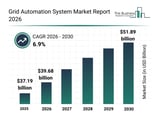
The grid automation system market is projected to reach about $51.89 billion by 2030, growing around 6.9% annually as renewables rise, smart grid investments increase, and AI-driven analytics and microgrid deployments expand.
The grid edge orchestration platform market is expected to hit roughly $13.46 billion by 2030, expanding at about 18.2% CAGR due to edge-focused orchestration, cloud-based grid management, AI analytics, renewable integrations, and real-time energy optimization.
Hybrid wired-wireless networks are increasingly used for remote grid monitoring, enabling more resilient and flexible operations.
A notable development in early 2023 was TE Connectivity’s acquisition of Kries to enhance grid monitoring, protection, and automation capabilities.
Emerging trends include a shift to distributed solar, batteries, and EV charging; faster software adoption over hardware; AI-based predictive maintenance for transformers and breakers; and government-funded digital substations and automation modernization.
Cross-border grid management software is advancing real-time coordination, with GE Vernova’s GridOS deployed for the West African Power Pool to enable secure trading, visibility, and coordinated dispatch.
Market segmentation spans components (hardware, software, services), deployment (on-premises, cloud), applications (energy management, grid optimization, DER integration, demand response, etc.), end-users, and subcategories like sensors, edge controllers, protection devices, EMS/DMS, and maintenance services.
Regional growth varies, but the global trend shows digital transformation driving efficiency, resilience, and smarter energy management across utilities and related sectors.
Summary based on 6 sources