Block Co-Founder Envisions AI-Native Transformation, Challenges Traditional Middle Management
April 1, 2026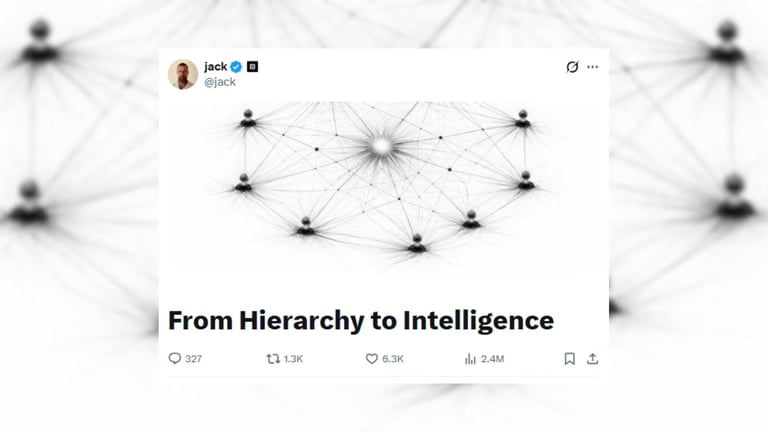

A three-role model emerges: individual contributors owning deep technical work, Directly Responsible Individuals for defined outcomes, and player-coaches who build teams while developing people.
AI would handle coordination tasks—tracking projects, flagging issues, and assigning work—while humans retain oversight for strategy, ethics, and governance in a human-in-the-loop framework.
Venture capitalists are pricing in the thesis by evaluating information architecture and data density as critical to AI-enabled design, potentially altering cost curves and valuations.
Redpoint Ventures outlines structural differences for AI-native companies, including higher margins, possibility-led product development, probabilistic QA, Field Deployment Engineers for sales, and education-focused customer success with consumption-based pricing.
The piece notes ongoing debates about AI readiness and limits of automation in risk-sensitive domains, balancing visionary plans with practical constraints.
The transition is early and experimental, with admitted potential failures and an open invitation for debate and feedback to stress-test the idea.
The plan centers on a remote-first setup, with work artifacts feeding a world model; success depends on high-quality customer signals from Cash App, Square, and merchant activity.
Block co-founder’s vision routes the company toward an AI-native, intelligence-driven organization where artificial intelligence could replace traditional middle management and guide a shift away from hierarchical structures.
There is skepticism about Block’s health and performance over the past decade, suggesting the radical approach may be more appealing in a pressured environment.
Overall takeaway: a coordinated, VC-backed playbook argues AI-native redesign can unlock speed and efficiency, but its long-term viability depends on Block’s trajectory and feasibility across industries.
Implications for crypto and fintech include governance, risk controls, and real-time product development, with guardrails, accountability, and data quality as essential.
Two AI-driven world models are proposed: one aggregating internal operation data for a dynamic, continuous view of company operations, and another mapping customer and merchant behavior using transaction data.
Summary based on 16 sources
Get a daily email with more Tech stories
Sources

The Times Of India • Apr 1, 2026
After cutting 4,000 jobs, Block CEO Jack Dorsey outlines AI future for the company; tells employees: We aim to ...
Cointelegraph • Apr 1, 2026
Block Betting on AI to Transform Management and Speed Up Decision-Making
Forbes • Mar 31, 2026
Billionaire Jack Dorsey Thinks AI Will Kill Middle Management
Forbes • Mar 31, 2026
Dorsey, Sequoia And Redpoint Lay Out A New Playbook For AI-Native Companies