Nigeria Customs Embraces AI to Boost Revenue and Transparency, Combat Leakages
April 13, 2026


Deputy Comptroller-General Kikelomo Adeola stressed transparency, efficiency, and accountability, noting the training aims to strengthen data analysis, collaboration, and robust systems in a complex financial environment.
The training prepares officers for an AI-driven environment and involves collaboration with the National Assembly Public Accounts Committees and other fiscal stakeholders to align oversight with operations.
Technology, especially risk management systems, has become central to customs operations for trade monitoring, fraud detection, and trade-pattern analysis, with AI and machine learning enhancing scanning and risk profiling.
AI-enabled risk management and scanning tools are expanding the capability to monitor trade, detect fraud, and improve efficiency across the revenue value chain.
AI-enabled scanners are already in use to assist lead image analysts in predicting objects of interest, signaling broader expansion of AI applications.
AI and machine learning are being applied in risk management, trade classification, and non-intrusive inspection, with plans to extend these technologies across banks, platform providers, auditors, and oversight bodies.
The initiative seeks to increase transparency by inviting legislators to witness technological advancements and streamline accountability, potentially reducing parliamentary summons through better record-keeping.
Industry and parliamentary leaders urged rapid AI adoption to block leakages and boost accountability, while stressing that human integrity and governance must accompany technology.
Nigeria’s Customs Service unveiled a plan to implement artificial intelligence to boost revenue, improve transparency, and curb leakages, announced during a three-day AI-focused training in Abuja.
AI is being integrated into existing systems to improve efficiency and accuracy, not introduced in isolation, with focus on risk management, trade analysis, cargo inspection, and tariff classification.
AI-driven systems will be integrated across the revenue value chain—from Customs to banks, platform owners, auditors, and NASS committees—to enhance efficiency and reduce human interference.
The revenue process spans the value chain across Customs, banks, platform owners, auditors, and National Assembly committees; strengthening each link aims to reduce leakages.
Summary based on 8 sources
Get a daily email with more AI stories
Sources
The Guardian Nigeria News - Nigeria and World News • Apr 13, 2026
Nigeria Customs Service adopts AI for efficient revenue generation, fiscal discipline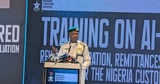
Punch Newspapers • Apr 13, 2026
Customs deploy AI to curb revenue leakages, deepen transparency
Businessday NG • Apr 13, 2026
Nigeria customs deploys AI to tackle revenue leakages, improve remittances
Tribune Online • Apr 13, 2026
Customs adopts AI-driven systems to boost revenue collection, curb leakages