Shanghai Unveils World's First Large-Scale Deployment of AI-Driven Humanoid Robots in Electronics Manufacturing
April 15, 2026

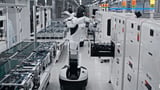
A world-first large-scale deployment of humanoid robots with embodied AI is being implemented on a live high-speed electronics production line in Shanghai, where AGIBOT’s G2 humanoid robots work alongside human operators to assemble, test, and sort Longcheer tablet devices, marking a milestone beyond prior pilots.
The deployment demonstrates embodied AI as a scalable, flexible manufacturing approach that blends simulation-based validation, reinforcement learning, and on-device intelligence to minimize setup and maintain stable performance.
Plans call for expanding the deployment to 100 robots by the third quarter of 2026 and broadening adoption to automotive, semiconductors, and energy sectors.
Industry collaboration emphasizes a rapid path from innovation to production and highlights a scalable, flexible manufacturing model capable of handling fluctuating demand and multi-model product lines.
Longcheer’s capabilities, global R&D and manufacturing footprint, and the strategic importance of mixed-model, high-flexibility production for modern product lifecycles are noted in context.
The system uses multi-modal sensing for object identification and task execution, enabling seamless interaction with complex production environments and mixed-model production.
The platform enables mixed-model production and rapid changeovers without custom tooling, reducing downtime versus traditional automation.
It supports 24/7 autonomous operation with minimal human intervention, delivering over 140 hours of cumulative operation and downtime below 4 percent, with a single G2 robot replacing multiple manual processes.
Technical novelty lies in embodied AI enabling rapid adaptation to dynamic production needs without custom tooling, supporting mixed-model production and reducing downtime through flexible software-driven automation.
Key performance metrics include throughput up to 310 units per hour, cycle times around 19–20 seconds, a continuous-operation success rate above 99.9%, and output of about 3,000 units per shift; deployment on the line was completed in roughly 36 hours.
Robots process 310 tablets per hour with 18–20 second cycles, maintaining 99.9%+ success, with scene calibration in five minutes and changeovers/retraining in four hours or less.
Production-line integration was completed in 36 hours, delivering about 3,000 units per shift and enabling 24/7 autonomous operation for over 140 hours with downtime under 4%.
Summary based on 11 sources
Get a daily email with more Tech stories
Sources
Interesting Engineering • Apr 15, 2026
Watch ‘world-first embodied AI’ humanoid robots take on manufacturing tasks in China
Forbes • Apr 15, 2026
World-First: Humanoid Robot On Live Industrial-Scale Electronics Production Line
People's Daily Online
Chinese humanoid robots deployed on assembly lines for precision tasks