Lunit Unveils AI Breakthroughs in Oncology at AACR 2026, Boosting Biomarker Precision and Treatment Strategies
April 17, 2026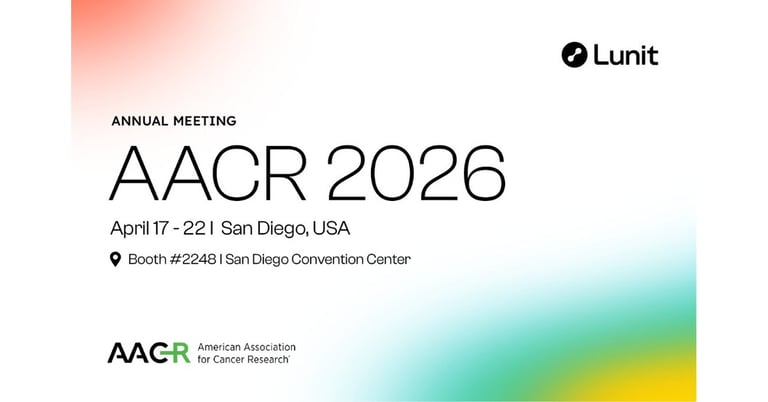

Lunit showcased six AI-driven studies at AACR 2026 in San Diego, highlighting AI-powered biomarkers, tumor microenvironment analysis, and real-world clinical applicability to improve treatment decision-making and workflows.
The research includes analyses of tumor-infiltrating lymphocytes, AI-based target discovery for bispecific antibodies, and biomarker work in CD47-targeted therapies, underscoring broad AI-enabled biomarker work.
Beyond the highlighted studies, Lunit’s AACR presentations reflect ongoing, broader research efforts in AI-assisted oncology.
In the exploratory MOUNTAINEER trial analysis, AI-quantified HER2 expression in HER2-positive metastatic colorectal cancer was strongly associated with response to tucatinib plus trastuzumab, with overall response rates around 43% and up to 80% in patients with higher HER2 expression, while TIL density predicted progression-free survival.
Overall, AI-derived HER2 metrics correlated with treatment response in the MOUNTAINEER trial, with TIL density serving as an independent prognostic factor for PFS.
Collaborations with Agilent Technologies and Ajou University Medical Center analyzed over 25,000 NSCLC samples using Lunit SCOPE IO and uIHC, revealing that high c-MET expression correlates with reduced immune cell density near tumor cells, indicating a spatial immune exclusion pattern and suggesting potential for MET-targeted therapy plus immunotherapy.
These global partnerships imply a potential for combining MET-targeted therapy with immunotherapy based on observed spatial immune patterns.
Presentations covered spatial analysis of the tumor microenvironment in relation to c-MET in NSCLC, HER2/TILs predicting response in MOUNTAINEER, AI-identified co-expressed proteins for bispecific antibodies, AI assessment of TILs in NSCLC and immunotherapy response, and cryo-EM characterization of IMC-002 anti-CD47 with safety/efficacy implications.
Specific poster dates and sections highlighted these topics, including April 19 for TME-cMET analysis and TIL-related AI assessments, April 21 for AI-guided bispecific targets and CD47 antibody work, and April 22 for HER2/TILs in MOUNTAINEER.
The same analysis found that higher HER2 expression yielded higher objective responses, and Tumor-Infiltrating Lymphocyte density independently predicted progression-free survival.
Attendees could find the featured studies at AACR 2026, with booth details and poster session times provided for engagement.
Low stromal TIL levels were linked to nonresponse and higher progression risk, emphasizing the need to integrate tumor biology with immune context in AI-driven treatment decisions.
Summary based on 3 sources
Get a daily email with more AI stories
Sources

Cision PR Newswire • Apr 17, 2026
Lunit to Present Six AI Studies at AACR 2026 Highlighting Advances in Precision Oncology and Real-World Clinical Application
Thailand Business News • Apr 17, 2026
Lunit to Present Six AI Studies at AACR 2026 Highlighting Advances in Precision Oncology and Real-World Clinical Application