Revolutionary Protein Interaction Model Boosts Accuracy by 17%, Paves Way for AI-Driven Drug Discovery
April 20, 2026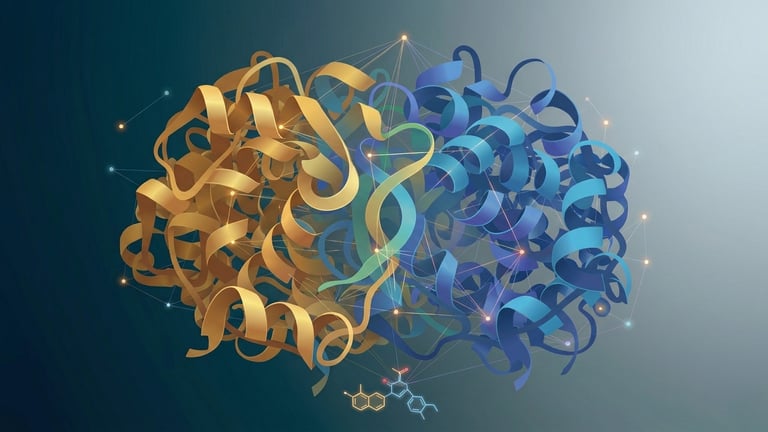

Published in Nature Communications on March 10, 2026, the study highlights implications for multi-protein complex prediction and AI-guided drug discovery.
A team from the National University of Singapore, led by Professor Zhang Yang, developed the paired protein language model (PPLM) that reads two interacting proteins simultaneously to predict protein–protein interactions.
Future work will integrate structural and experimental data and extend applications to more complex systems such as host–pathogen interactions to enhance translational impact.
PPLM outperformed both sequence-based and structure-based methods in challenging cases, including antibody–antigen interactions, and identified biologically meaningful interaction patterns.
PPLM is trained on over three million protein pairs and jointly encodes paired sequences to capture both individual protein features and partner-dependent interaction patterns.
The model introduces three specialized tools—PPLM-PPI for predicting protein interactions, PPLM-Affinity for estimating binding strength, and PPLM-Contact for identifying interaction interfaces—delivering up to about 17% higher accuracy than leading methods across multiple benchmarks.
These tools collectively demonstrate a three-pronged approach to protein–protein interaction analysis, achieving significant performance gains across diverse datasets and species.
The work signals a shift from single-protein analysis to interaction-aware modelling, with potential applications in proteome-scale interaction discovery, drug target identification, and therapeutic development.
Summary based on 3 sources
Get a daily email with more AI stories
Sources
National University of Singapore • Apr 20, 2026
NUS scientists devise AI model that “reads” protein pairs, unlocking new insights into disease and drug discovery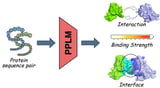
Mirage News • Apr 20, 2026
AI Model Reads Proteins, Boosts Drug Discovery