OpenAI Launches Symphony: Revolutionizing Project Management with AI-Powered Coding Agents
April 28, 2026

Core concepts include treating tasks as the unit of work, codifying human workflows in a WORKFLOW.md so agents can follow them, and expanding from strict task transitions to broader objectives and context.
Early implementations report dramatic gains, including a 500% rise in landed pull requests within about three weeks and broader participation from product managers and designers, along with smoother CI, merges, and QA in large monorepos.
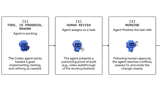
OpenAI unveils Symphony, an open-source orchestration standard designed to turn a project-management board into a control plane for coding agents.
Symphony is a reference implementation rather than a finished product, showing how Codex App Server can pair with workflow tools to manage agent work and inviting others to tailor versions.
The project frames tasks as autonomous execution runs, enabling teams to oversee work rather than micromanage individual agents.
Potential downsides include fewer opportunities for real-time human correction, but safeguards like automated testing and guardrails are being strengthened to enable self-correction over time.
Public dialogue around AI-enabled work raises concerns about potential increases in managerial workload and stress, with some arguing AI could amplify work rather than lessen it.
Non-engineering staff such as product managers and designers can submit feature requests and receive responses without touching code repositories, broadening participation while preserving review processes.
The system decouples work from individual sessions and pull requests, using Linear's state machine to drive agent behavior and supporting tasks that may involve code changes, investigations, or analyses not directly touching the codebase.
The excerpt focuses on the concept and potential implications, with no additional technical specifications or usage examples provided.
Symphony emphasizes agent-centric workflows, automated tests, guardrails, and treating Codex as a collaborative teammate in development.
Agents can automatically create new tasks, propose improvements, and file follow-up issues when gaps or opportunities are detected, with humans reviewing results and guiding final decisions.
Summary based on 8 sources