China Revolutionizes Education with AI, VR, and Smart Devices to Bridge Urban-Rural Learning Gap
May 30, 2026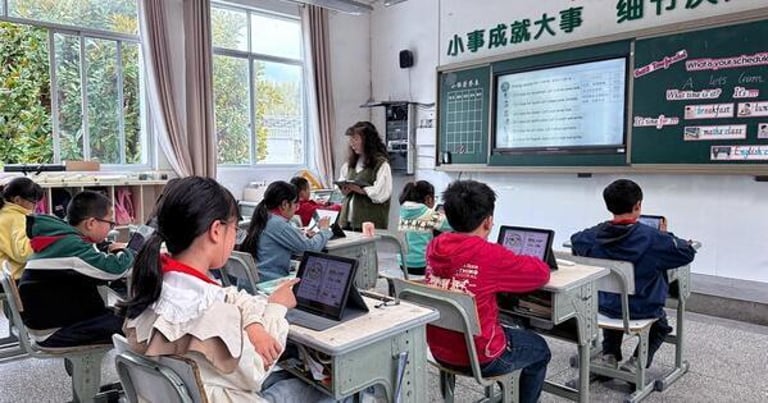

Higher education institutions, including Zhejiang University, are incorporating AI into curricula with courses, intelligent agents, VR, and smart labs, signaling a broader AI-driven shift in teaching and research.
Zhejiang University offers about 220 interdisciplinary AI courses and deploys real-time intelligent agents and immersive VR/smart devices in language and agriculture robotics labs.
iFLYTEK supplies smart devices to rural schools, supports over 60,000 institutions, and helps build national and regional smart education platforms to improve resource access in underdeveloped areas.
China is rapidly integrating digital technologies such as AI, VR, and smart devices into education to transform learning and narrow urban–rural gaps, with efforts spanning rural and urban schools.
AI-powered classroom tools analyze student participation, generate personalized questions and homework, and create real-life teaching scenarios, while smart sports systems collect biometric data to tailor health and fitness profiles for students.
In Beijing's No. 13 High School, intelligent agents monitor class participation and homework to produce personalized questions, tasks, and real-world teaching scenarios.
Experts say regional digital transformation lays the groundwork for broader educational equity and long-term improvements in teaching and learning outcomes.
In rural Zhejiang, the Qixi Township Central School uses AI assistants on tablets to aid reading and poetry, with a 2025 program empowering small rural schools with smart devices and tailored learning materials for left-behind children.
A Zhejiang Province pilot (launched in late 2025) provides intelligent terminals to rural schools with under 100 students to expand access to digital learning resources.
The 15th Five-Year Plan (2026–2030) promotes AI-driven transformation of education models and urges nationwide AI integration to bridge regional gaps.
AI-powered tools in Hangzhou schools convert speech to text, automatically edit videos, and personalize storytelling and learning experiences, while preserving student projects for customized content.
Across multiple schools in Hangzhou, Beijing, and Xiong’an New Area, AI-assisted storytelling, language labs, and animated videos are used to explain concepts and support individualized learning.
Summary based on 2 sources