ChatGPT Launches Dreaming Memory Feature: Balancing Personalization with Privacy in AI Interactions
June 4, 2026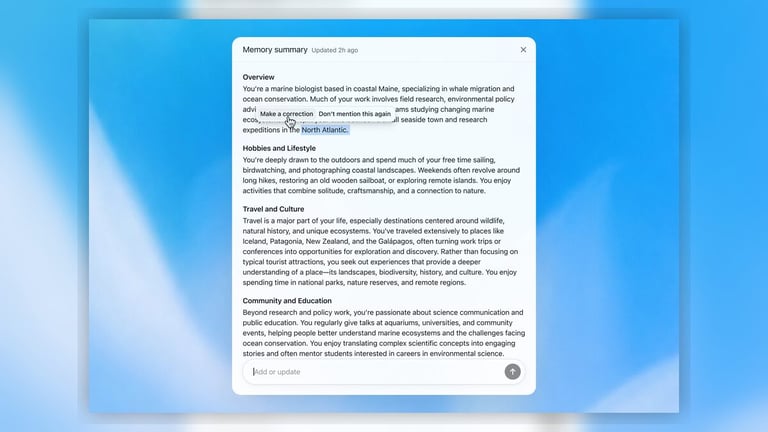

ChatGPT has introduced a Dreaming memory feature for Plus and Pro subscribers in the United States, enabling background synthesis of user knowledge from past chats to personalize responses.
Users gain control over memories with options to review saved memories, delete specific ones, clear all memories, and toggle memory usage for transparency and autonomy.
Dreaming allows context from previous conversations to influence future interactions, and memories can evolve as user preferences change.
There are risks of more convincing but potentially incorrect answers due to remembered context and challenges in keeping memories relevant as they age.
Regulatory and public concerns feature prominently, including GDPR, the EU AI Act, data-tracking class actions, and studies on personalization and context bleed across chats.
Governance questions for businesses loom, covering data sensitivity, account boundaries, and whether consumer AI should remember employee data; OpenAI notes it does not train on certain enterprise content by default, though internal rules are needed.
Trust, persistence, correction, forgetting, and portability are central to the product, with user perception of control pivotal for adoption.
The key strategic question is whether memory becomes a competitive advantage or a liability, balancing personalization with privacy, control, and inspectability.
Freshness, continuity, and relevance drive memory design: prioritizing recent information, maintaining coherent threads over time, and surfacing only context applicable to the current exchange.
Core optimizations revolve around freshness, continuity, and relevance to reduce noise and improve the usefulness of remembered context.
Practical examples show natural-language requests aided by memory, such as controlling smart home devices, setting temperatures, and routine planning.
A concrete use case demonstrates memory tailoring responses to specific gear configurations discussed before, enhancing continuity and personalization.
Summary based on 54 sources
Get a daily email with more Tech stories
Sources

OpenAI • Jun 3, 2026
Dreaming: Better memory for a more helpful ChatGPT
9to5Mac • Jun 4, 2026
OpenAI says ChatGPT’s memory feature is getting smarter and coming to free users

The Decoder • Jun 4, 2026
ChatGPT now saves narrative dossiers about you sorted by work, hobbies, and travel preferences