China's AI Talent Poaching Signals New Global Race, Shifts Focus to Practical AI Deployment
June 6, 2026

Anthropic warns about frontier-models without oversight, while ByteDance and Tencent now host researchers who helped build those frontier systems, potentially accelerating competitive momentum.
Chinese leaders and industry voices see vast untapped AI potential globally, advocating smaller, cost-efficient models for daily tasks as a practical path forward, per Baidu’s Robin Li and Tencent’s Yao Shunyu.
China’s state-driven push into basic research strengthens domestic roles and a robust talent pipeline, reinforcing the structural shift in global AI leadership.
China is shifting from a slow bleed to a structural shift in AI talent, actively poaching from U.S. firms to build foundational research and larger strategic programs, signaling a new global race dynamic for AGI.
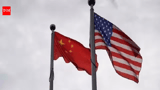
The US-China AI race is moving from chip dominance to talent competition as U.S. immigration policy tightens, influencing where researchers choose to work.
Tencent reorganizes around Yao Shunyu, establishing an AI Infrastructure Department and three units—AI Infrastructure, AI Data, and Data Computing Platform—to accelerate large-model research with an emphasis on robust everyday performance.
Wu Yonghui, formerly at Google DeepMind, joins ByteDance to lead the Seed team’s foundational research, shaping Doubao 2.0 and Seedance 2.0 under the direct oversight of ByteDance’s CEO.
High-profile moves illustrate the trend: Tencent hired former OpenAI researcher Yao Shunyu as Chief AI Scientist; ByteDance recruited Wu Yonghui from Google DeepMind to lead AI research in California; Alibaba recruited Hao Zhou from Google DeepMind for Qwen.
Strategic shift favors deploying useful, scalable AI in real-world ecosystems over building ever-larger models, with WeChat as a potential proving ground for smaller-model strategies.
U.S.-based firms have chased AGI timelines, while Chinese firms prioritize practical AI applications for industry and consumer products.
Chinese tech giants are recruiting former U.S. researchers to bolster AI programs, marking a strategic pivot in leadership and capability.
The trajectory points to a broader move from AGI timelines toward practical deployment, affecting where top talent works and how national AI ecosystems evolve.
Summary based on 2 sources