South Korea Unveils Phase 2 of Physical AI Alliance to Boost Global Competitiveness
June 22, 2026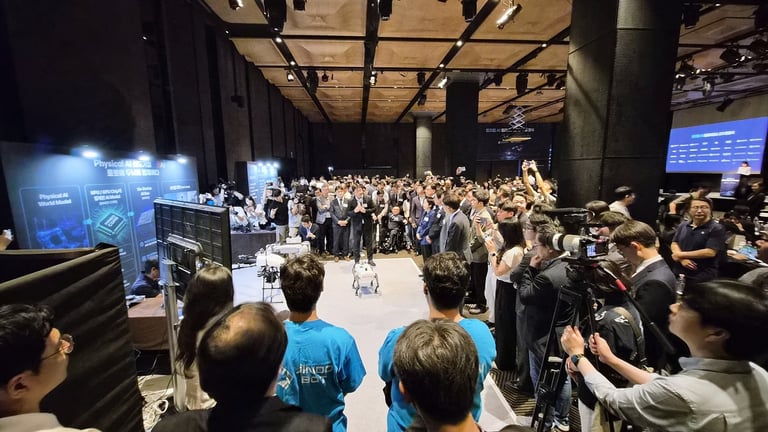

South Korea’s Ministry of Science and ICT has launched Phase 2 of the Physical AI Alliance, shifting from policy discussions to an execution-focused platform aimed at accelerating physical AI development and deployment across industries.
The initiative aims to build a comprehensive K-Physical AI Full Stack that links domestic AI semiconductors, models, robots, sensors, data centers, and an industrial data ecosystem to strengthen Korea’s leadership in physical AI.
Phase 2 seeks to connect identified projects with R&D, demonstrations, policy financing, and global cooperation programs, while helping participating firms attract overseas investment and expand sales through overseas bases and international events.
Key goals include establishing a domestic K-Physical AI Full Stack, developing a platform that covers networks, systems integration, data centers, security, standards, certification, and operations, and expanding industry uptake through cross-sector collaboration.
Legislative support from the National Assembly is being signaled, including potential special acts and data center construction to back the initiative and the development of a domestic 1-gigabit data ecosystem.
Demonstrations from domestic companies RealWorld and maum.ai showcased at the event illustrate current capabilities.
Participation will be broadened to include more industry associations and organizations across the physical AI value chain, with ongoing collaboration among ministries and industry alliances.
The alliance is being reorganized into a Physical AI Total Solution Platform that links technological achievements to deployment and creates a data-driven feedback loop for future development.
Leaders emphasize strengthening independent technological capabilities and deployment infrastructure to stay competitive in the global physical AI race.
Governance is being restructured to be jointly managed by MSIT and KOSA to improve government-private coordination and execution.
The organization is moving from ten working groups to three divisions—K-Physical AI Full Stack, Vertical Industry Bridge, and Infrastructure Governance—supported by 15 action groups to drive practical collaboration.
Plans for 2024 envision a Korean-style full-stack physical AI platform, a dedicated training center, refined supportive legislation, and a 2027 budget and internal projects to foster a self-reliant domestic ecosystem powered by NPU-based environments and nationwide data hubs.
Summary based on 2 sources