Apptronik Launches Robot Park in Austin, Targets 2027 for Humanoid Robot Commercial Deployment
June 30, 2026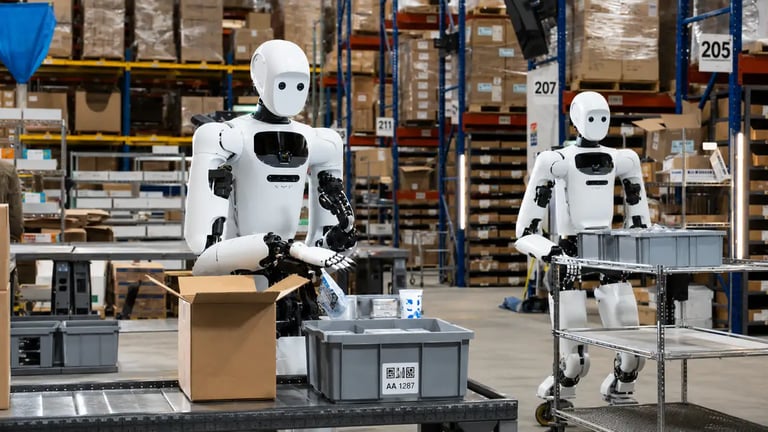

Apptronik has opened Robot Park in Austin, a new training facility built with Google DeepMind to accelerate turning humanoid robotics from pilots to production by collecting real-world data at scale.
Apollo 2 is a versatile humanoid robot, able to move, pick up objects, and interact with people in real-world settings, available in both bipedal and wheeled configurations, and has been used for extensive data collection over more than a year.
Data from Apollo 2 across Robot Park and partner sites, including Mercedes-Benz and GXO, feeds Google DeepMind’s Gemini robotics models under a research partnership.
Commercial deployment is planned to begin in 2027, with ongoing pilots through 2026 as Apptronik scales up toward larger production.
Apptronik’s commercial plan unfolds in three phases—prove technology, prove customer willingness to pay, and scale to profitability—indicating a shift from demonstrations to early commercial testing.
Apollo 3 will improve scalability and reduce BOM costs with redesigned end effectors, sensors, and a safety-first perception approach to move from demos to deployable capability.
CEO Jeff Cardenas underscores a shift from demos to real-world performance and frames robotics as a strategic national-interest space race with implications for competitiveness and security.
Industry implications include potential job displacement concerns, with examples like JD.com warning robots may replace human couriers in the future.
Apollo 3 is slated for launch next year, with a data-pipeline-driven path to rapid productization and market scaling beyond prototypes.
The market features competitors such as Tesla’s Optimus, Figure AI, and Agility Robotics, all pursuing commercial humanoids with varying timelines.
Apptronik traces its origins to UT Austin and NASA’s Valkyrie project, employing over 350 people.
The company has raised over $935 million in Series A funding, including a $520 million extension in February 2026, valuing the company above $5 billion with investors like Google and Mercedes-Benz.
Summary based on 9 sources
Get a daily email with more Tech stories
Sources



The Star • Jun 30, 2026
Apptronik launches robot training hub, unveils Apollo 2 humanoid robot
Crypto Briefing • Jun 30, 2026
Apptronik unveils 90,000 sq ft Austin facility for teleoperation data collection with Google DeepMind