Cerebellum-Inspired Memtransistor Revolutionizes AI with Energy-Efficient Novelty Detection
July 10, 2026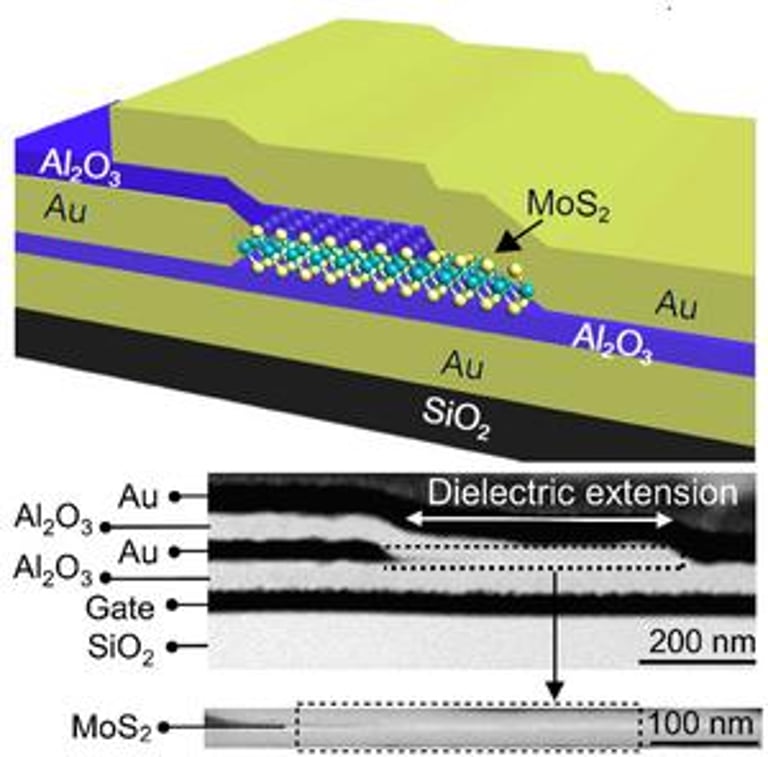

This breakthrough could power ultra-low-power, always-on edge AI for wearables, autonomous vehicles, robotics, and real-time cybersecurity, reducing reliance on cloud data centers.
The project is led by Northwestern researchers and collaborators, with publication simultaneously highlighting the nature of the collaboration and authorship.
Researchers plan to add learning and adaptation, extending cerebellar-inspired functionality beyond simple novelty detection.
The memtransistor uses atomically thin MoS2 with an asymmetric electrode design to switch between excitatory and inhibitory modes, integrating memory and computation in a single device.
Biological inspiration centers on the cerebellum’s balance of excitatory and inhibitory signals, enabling the chip to ignore routine data and respond quickly to novel events.
A cerebellum-inspired memtransistor from Northwestern rapidly detects novelty while ignoring routine inputs, enabling energy-efficient, always-on AI.
The device integrates memory and computation, mirroring the cerebellum’s strategy of suppressing expected information to focus on the unexpected and cut unnecessary energy use in AI systems.
The Nature Communications study, published on July 10, 2026, lists Northwestern Engineering researchers including Mark C. Hersam and Vinod K. Sangwan, with Indira M. Raman and Amit Trivedi, and notes NSF funding.
In ECG tests, the memtransistor detected abnormal rhythms within a fraction of a heartbeat, achieving over 98% accuracy and exceeding traditional AI in speed by processing far fewer operations.
The device demonstrates rapid novelty detection by ignoring normal heartbeats and promptly flagging irregularities, delivering high accuracy with substantially lower computational load.
Overall, the proof-of-concept shows energy-efficient anomaly detection, with about 10,000 times fewer computer operations than conventional AI approaches.
By avoiding unnecessary data analysis, the approach aims to cut energy consumption for wearable health monitors, autonomous vehicles, robotics, and cybersecurity.
Summary based on 3 sources
Get a daily email with more AI stories
Sources

Neuroscience News • Jul 10, 2026
AI Chip Mimicking Brain’s Reflex Center Developed
EurekAlert! • Jul 10, 2026
AI gets a cerebellum
Northwestern Engineering • Jul 10, 2026
AI Gets a Cerebellum