TYLSemi Secures $43M to Revolutionize AI with Open-Standard Chiplets, Challenging Industry Giants
July 14, 2026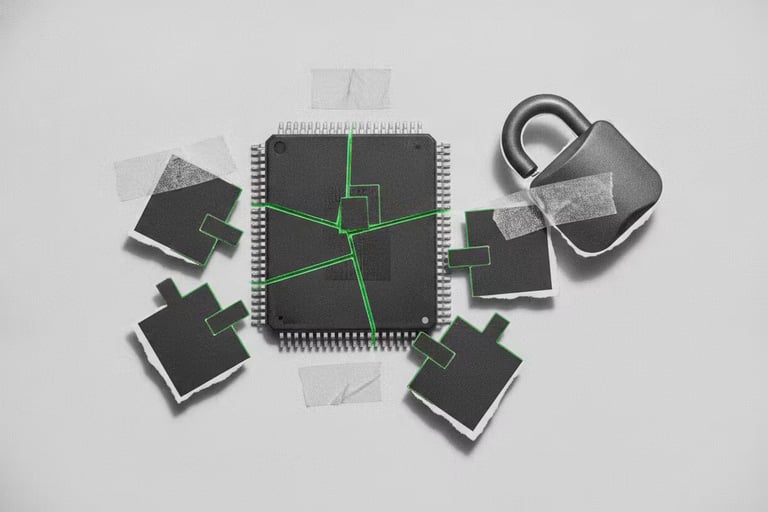

Traditional interconnects from Broadcom and Marvell are often tied to co-development with a single vendor, creating switching costs and ecosystem lock-in.
Chiplet technology is framed as a scalable, cost-efficient alternative to monolithic designs, enabling multiple specialized chips to interconnect within a single package.
TYLSemi targets the modular AI accelerator market and aims at hyperscale cloud providers and specialized AI workloads, with a San Jose base.
Co-founders Mohit Gupta and Sunil Bhardwaj bring deep semiconductor experience from Alphawave, SiFive, Cadence, and Rambus, signaling strong technical and industry credibility.
Lead investor Matter Venture Partners, with participation from Viola Ventures, GHOVC, Egis Technology, plus strategic funding from unnamed AI infrastructure and semiconductor firms, underscoring broad support.
The founders argue that standardization enables healthier market progress and reduces reliance on proprietary interconnects.
The chiplet approach aims to boost supplier competition and multi-sourcing in AI hardware, potentially pressuring margins tied to closed ecosystems as packaging and integration become more important.
TYLSemi has raised $43 million in early funding to develop open, modular AI chiplets built on standards-based interconnects, aiming to reduce lock-in and foster healthier competition.
Industry experts anticipate a shift toward modular multi-die architectures as AI processors grow more complex, with standards like UCIe enabling practical chiplet designs.
TYLSemi positions standardization as a path to more competition and avoids vendor lock-in, contrasting with proprietary approaches from Broadcom and Marvell.
If successful, open-standard chiplets could shift value toward firms that excel at packaging, testing, and integrating modular systems at scale rather than just providing high-speed interconnects.
The company plans to grow its silicon design, advanced packaging, and systems engineering teams ahead of commercial deployment.
Summary based on 8 sources
Get a daily email with more AI stories
Sources

Yahoo! Finance • Jul 14, 2026
TYLSemi raises $43 million to create building blocks of custom AI chips
Finimize • Jul 14, 2026
TYLSemi Raises $43 Million To Build Open AI Chiplets
Euronext Logo • Jul 14, 2026
TYLSemi raises $43 million to create building blocks of custom AI chips
Crypto Briefing • Jul 14, 2026
TYLSemi raises $43M to build the Lego blocks of custom AI chips