Revolutionary AI Heuristic RL-SPH Debuts at ICML 2026, Masters Complex Integer Linear Programs
August 3, 2026

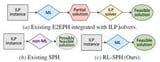
A new AI-driven start primal heuristic called RL-SPH was presented at ICML 2026 in Seoul, introducing a method that generates feasible plans for complex integer linear programs without relying on external solvers.
The paper, titled RL-SPH: Learning to Achieve Feasible Solutions for Integer Linear Programs, provides a feasibility-first, two-stage approach aimed at delivering practical, implementable solutions.
The work introduces ILP-GT, an AI model that learns variable-constraint relationships and uses a feasibility-aware search to guide impactful updates and improve efficiency.
ILP-GT operates alongside a feasibility-aware search strategy to prioritize revisions likely to resolve constraint violations and boost the search process.
RL-SPH is designed for problems with hard constraints in logistics and production settings, where traditional ML predictions risk infeasibility.
RL-SPH emphasizes first securing a feasible solution before pursuing higher-quality optimization, addressing real-world constraints such as delivery deadlines, capacity, and labor limits.
The method targets tasks with multiple hard constraints, including parcel delivery routes, factory production schedules, semiconductor planning, and hospital staff rosters, where purely predictive models may violate constraints.
In comparative benchmarks, RL-SPH achieved 100% feasibility across multiple datasets, outperforming end-to-end baselines and AI techniques like PAS, DDIM, and DiffILO.
Training time for RL-SPH averaged about 30 minutes, roughly 14.7 times faster than existing methods, with strong generalization to larger and novel problem types.
RL-SPH iteratively revises candidate solutions, evaluating feasibility at each step and gradually reducing constraint violations before cost or time optimization.
The research received support from the Ministry of Science and ICT, IITP, NRF, and related programs.
Generalization tests on MIPLIB show RL-SPH can handle problems up to 67 times larger than training cases and adapt to new problem types.
Summary based on 4 sources
Get a daily email with more AI stories
Sources
EurekAlert! • Aug 2, 2026
KAIST develops AI that generates feasible plans for delivery, production, and workforce scheduling
BIOENGINEER.ORG • Aug 3, 2026
KAIST AI Generates Feasible Delivery, Production, and Workforce Schedules
Mirage News • Aug 2, 2026
AI Revolutionizes Delivery and Workforce Scheduling
Mirage News • Aug 3, 2026
AI Revolutionizes Delivery, Production, Workforce Plans