AI Revolutionizes Drug Discovery: Global Surge Led by North America, Asia Pacific Fastest Growing
September 29, 2026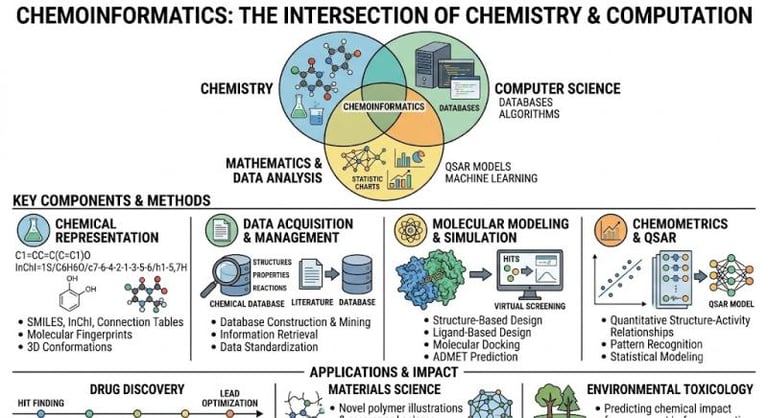

The frontier of drug discovery is being reshaped by accelerating AI-driven approaches: from rapid AI-enabled drug discovery and QSAR/docking-guided precision molecular design to cloud-based research scaling and expansive molecular data intelligence across pharma, agrochemicals, materials science, toxicology, and manufacturing.
Geographic momentum shows North America leading with about 41%, Europe at around 28%, Asia Pacific growing fastest at roughly 24%, and Latin America and the Middle East/Africa trailing as smaller but rising regions.
In mid to late 2026, U.S. developments include Schrödinger’s Bunsen AI co-scientist via a Bristol Myers Squibb collaboration supported by NVIDIA and Google Cloud; Insilico Medicine pushing its Pharma.AI platform toward Phase III for rentosertib for IPF using PandaOmics, Chemistry42, and inClinico; and Recursion Pharmaceuticals highlighting its AI-native platform and candidates like REC-4539.
Market structure spans software and services, with applications in drug discovery, chemical analysis, molecular modeling, and regulatory compliance, serving end users in pharma, biotech, food and beverage, chemical industries, and academia.
The reporting approach features quarterly updates, integrated tracking of computational chemistry and drug discovery, live pricing dashboards, and client customization to support real-time market intelligence and decision-making.
Leading players and strategic profiles include Schrödinger, Dassault Systèmes BIOVIA, OpenEye, Cadence Molecular Sciences, and Chemical Computing Group, all advancing physics-based modeling, digital molecular design, computational workflows, cloud-enabled design, and integrated cheminformatics.
The chemoinformatics market is projected to grow from about USD 7.95 billion in 2025 to over USD 32 billion by 2035, at a CAGR around 15%, propelled by AI, ML, molecular modeling, and predictive analytics expanding into drug discovery, materials research, and chemical development.
Notable 2026 M&A and collaborations include Elix, Inc. and Axcelead Drug Discovery Partners; Grünenthal joining Eli Lilly’s TuneLab; and Schrödinger teaming with Bristol Myers Squibb, reflecting heightened AI-enabled drug discovery and synthesis planning activity.
In Japan, mid-2026 developments feature Chugai Pharmaceutical pursuing high-precision molecular simulation for future quantum computing use, Kyowa Kirin planning a new R&D hub for AI-enabled decision making, and Astellas Pharma outlining AI investments across Protein Station and Human-in-the-Loop, backed by NVIDIA-powered supercomputing for early discovery.
Summary based on 1 source