AI Scientist Revolutionizes Biology, Medicine, and Chemistry Research with Autonomous Discovery System
September 30, 2026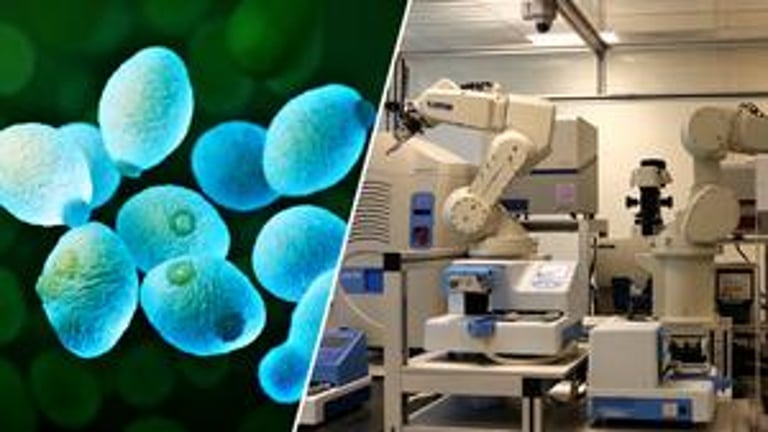

Autonomous AI systems are framed as collaborators with humans, capable of routine hypothesis generation and experimentation while humans handle broader significance and ethical considerations.
The project presents autonomous AI as an augmentative tool that not only supports but actively generates new scientific knowledge, though human scientists still set research priorities, interpret broader significance, and oversee ethics.
The study, titled Agentic AI integrated with scientific knowledge: laboratory validation in systems biology, appears in the Journal of the Royal Society Interface and is funded by WASP, UK EPSRC, CHA...R, and Formas, with affiliations to Chalmers, Gothenburg, and Cambridge.
A closed-loop AI laboratory was developed to autonomously conduct research on brewer’s yeast (Saccharomyces cerevisiae) by integrating large language models, automated reasoning, and laboratory automation.
A team at Chalmers University of Technology in Sweden developed an AI scientist capable of autonomously generating scientific hypotheses, designing experiments, and interpreting results in a closed-loop laboratory setup focused on brewer’s yeast.
The project, led by Ievgeniia Tiukova and senior author Ross King at Chalmers University of Technology, in collaboration with the University of Gothenburg and the University of Cambridge, builds on previous robot scientists like Adam and Eve for drug discovery.
The research extends the robot scientist concept (Adam, Eve) to general autonomous discovery applicable to biology, medicine, chemistry, and related fields.
The AI integrates large language models, automated reasoning, and laboratory automation to process extensive biological knowledge (genome, metabolism, prior studies) and identify promising questions, propose experiments, and iteratively refine its understanding based on new evidence.
Funding sources include WASP, UK EPSRC, CHAIR, and Formas, signaling substantial support for autonomous laboratory research.
Proponents expect autonomous laboratories to speed biological, medical, and biotechnological discoveries by exploring systems faster and better optimizing lab resources, while acknowledging human scientists’ ongoing role in setting priorities, interpretation, and ethics oversight.
The study demonstrates a potential acceleration of biological research by systematically exploring questions and optimizing lab resource use, with autonomous systems envisioned as collaborators with human researchers in future developments.
The AI scientist can generate scientific hypotheses, design experiments, evaluate outcomes, and iteratively refine its understanding without constant human input, acting as a knowledge-generating agent rather than merely a decision-support tool.
Summary based on 2 sources
Get a daily email with more AI stories
Sources
EurekAlert! • Sep 30, 2026
AI scientist autonomously generates and validates new biological discoveries