Moscow Startup Summit 2023: AI, Robotics, and New Tech Ventures Take Center Stage
October 6, 2026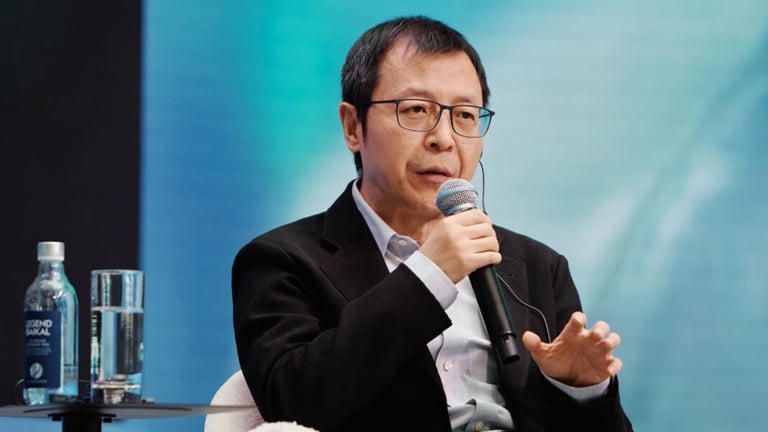

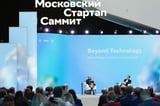
The second Moscow Startup Summit took place September 29–30 at SberCity, School 21 campus, bringing together international experts to discuss AI, robotics, leadership, and smart cities.
The event was framed as a platform for shaping future industries, cities, and business models through AI, robotics, and entrepreneurship.
Participants included technology entrepreneurs, investors, businesses, academics, and government representatives from Russia and 21 other countries, with online broadcasts drawing about 50 million views.
A new award, Best GigaAgent Implementation Case, honored a digital dictionary project for the Ingush language, highlighting efficient deployments using the GigaAgent service.
Renowned physicist Carlo Rovelli emphasized that progress stems from embracing mistakes and venturing beyond familiar assumptions, with new ideas arising at the boundary of the known and unknown.
Sberbank's Alexey Katkov noted that solo founders account for over a third of new tech companies and highlighted CoFounder as a single entry point into tech entrepreneurship.
The Innovation and Technology Exhibition showcased practical AI and engineering solutions across sectors, including XpressCBC’s portable five-part CBC analyzer and eVerse.AI’s ConnectedCow system with GreenCow sensors for dairy health and carbon programs.
A Neurocode neuroheadset was used at Demo Day to record jury attention and interest during pitches, marking a first for the event.
Sharma warned against the 'one genius and a thousand followers' mindset and urged founders to prioritize productivity, storytelling over jargon, ongoing idea generation, and digital detoxes.
CoFounder, powered by GigaChat, was unveiled to guide aspiring entrepreneurs through ideation, hypothesis testing, prototyping, and pitch development, with learning paths and certificates from partner universities like Fudan.
Elvis V from Russia showcased an electronic vision system for the visually impaired that uses a camera and AI to process surroundings and a neural implant to convey light-based representations to the visual cortex.
Ling Shao discussed Terminus Group’s smart city projects and argued that physical AI requires latent knowledge, common sense, and intuition beyond large language models across understanding, self-evolution, and autonomy.
Summary based on 4 sources
Get a daily email with more AI stories
Sources

Logo • Oct 6, 2026
More Than 4,500 People Took Part in the Second Moscow Startup Summit
TechFinancials • Oct 6, 2026
The Future of AI, Robotics, and Technology Entrepreneurship Discussed at Moscow Startup Summit