AI's Role in Math: Catalyst for Insight or Threat to Tradition?
October 11, 2026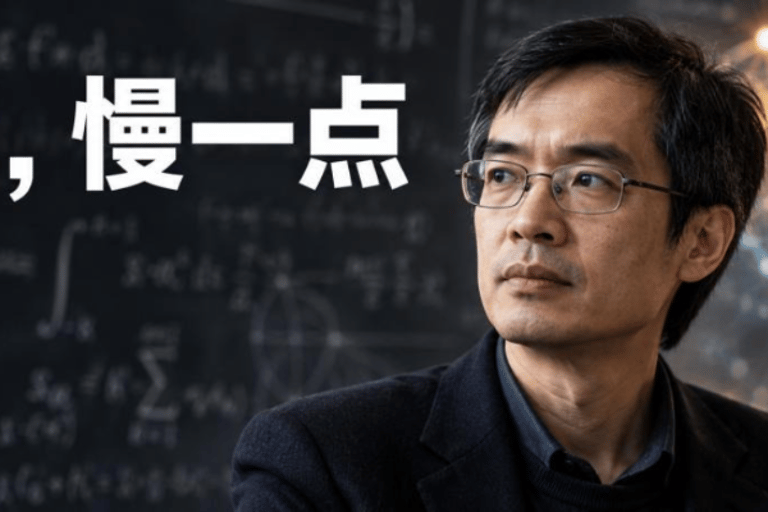

The debate centers on whether AI and tools like Lean threaten traditional human-led mathematical research or can be reframed to enhance human understanding.
Open Exposition Problems, traced to Timothy Chow, envision transparent, motivated explanations that allow others to reproduce and understand advances, potentially guiding AI-generated proofs toward human-understandable insight.
A viral video of Tao urging to slow AI development contrasts with his earlier support for SAIR (Open Source Mathematical Models and How to Contribute), illustrating competing stances within days.
Grant Sanderson (3Blue1Brown) pushes for redefining the value of mathematics beyond proofs, introducing Motivated Exposition to emphasize explanation and understanding.
Examples include AI solving Erdős Problem No. 1196 with GPT-5.4 Pro, followed by human mathematicians clarifying and contextualizing the approach in a readable paper.
Sanderson proposes practical reforms: AI-assisted problem solving in doctoral defenses with clear explanations, a modernized Hilbert’s Problems focused on exposition, and tenure criteria that reward expository and educational impact.
A recurring theme is that while AI can generate proofs, human understanding, motivation, and context remain essential, with AI serving as a mining tool rather than the final arbiter of truth.
Terence Tao's blog activity sparked a high-stakes debate in math and AI communities about AI’s impact on progress and doctoral training.
The broader question is whether the next era of mathematics will be driven by machine-generated results or by humans who can explain and connect those results within the wider mathematical landscape.
Summary based on 1 source