Mazak and ABEJA Revolutionize Manufacturing with AI to Enhance Efficiency and Flexibility by 2028
October 16, 2026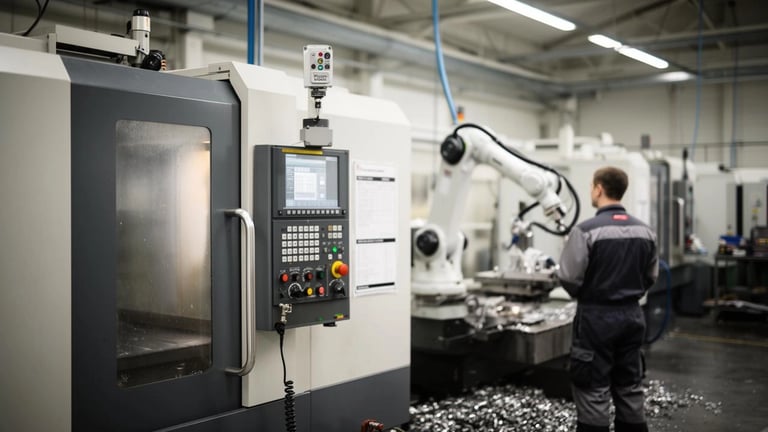

Mazak and ABEJA have launched a joint effort to implement physical AI on manufacturing floors, targeting faster planning, flexible scheduling, and lower operating costs by applying AI to real shop-floor decisions.
The collaboration combines ABEJA's enterprise AI platform with Mazak's machine tools and production systems expertise to ensure AI delivers value in day-to-day factory operations, not just demonstrations.
They announced a joint development plan on October 16, 2026, focusing on machining processes, production scheduling, and robot behavior learning, with commercialization aimed by the end of Mazak's fiscal year 2028.
Adoption will require clean data, safety controls, reliable connectivity, and capable workers to challenge AI recommendations, emphasizing augmentation of human capability over replacement.
The move comes as competition in the machine tool market heats up, with China becoming the largest exporter and Chinese government AI initiatives accelerating industrial AI, prompting Japanese manufacturers to push AI-enabled innovation.
A robot learning environment will connect data gathering with AI training, evaluation, and testing on real equipment to ensure dependable performance beyond simulations.
A primary AI agent will propose machining sequences, methods, and cutting conditions by codifying expert know-how to standardize and accelerate job preparation.
The collaboration follows a Human in the Loop approach built on three pillars: AI agents for machining process optimization, AI agents for production schedule optimization, and a robot behavior learning environment, all aimed at standardizing quality, shortening lead times, and improving equipment utilization.
The AI agents will continuously learn from operational data and on-site know-how, enabling adaptation to each customer’s production environment and planned deployment on Yamazaki Mazak tools and related automation.
The partnership responds to Japan’s manufacturing skills gap, where rising demand meets a shortage of experienced workers for process planning and scheduling.
A second AI agent will assist production scheduling by considering machine availability, production plans, material inventory, and operational knowledge to adapt schedules, especially in multi-product, small-batch settings.
Overall, physical AI is framed as a practical tool to boost factory flexibility and resilience, while preserving human oversight and expertise.
Summary based on 2 sources
Get a daily email with more AI stories
Sources
BigGo Finance • Oct 16, 2026
Yamazaki Mazak and ABEJA to Jointly Develop Physical AI Implementation for Machine Tools