Revolutionary AI Chip Enhances Real-Time Fusion Plasma Control
October 19, 2026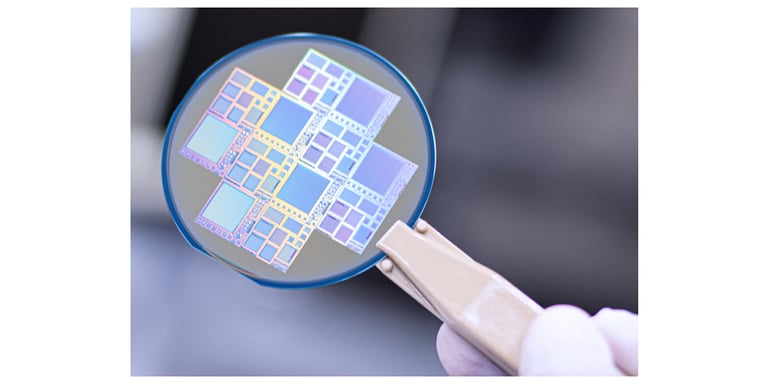

Great Sky, in collaboration with Brookhaven National Lab, Princeton Plasma Physics Laboratory, and the DIII-D National Fusion Facility, has developed a superconducting analog neural-network AI chip designed for real-time sensing and control of fusion plasmas.
The team demonstrated a superconducting analog neural network AI chip capable of real-time fusion plasma control, showcasing high-speed analysis via superconducting optoelectronic networks.
The release includes contact information and a link to a full multimedia release and the company website.
Richard Buttery of DIII-D praised the technology's potential impact on diagnostics and control for fusion technology.
The work aligns with DOE priorities in advanced AI, quantum technologies, and transformative energy, highlighting potential benefits for fusion control and other fast, complex systems.
The project underscores alignment with DOE priorities and suggests applications beyond fusion, including quantum system control, cybersecurity, and video intelligence with continual learning.
Great Sky traces its origins to the U.S. National Institute of Standards and Technology, with backing from investors including Bison Ventures, Olive Tree Capital, Matchstick Ventures, Range Ventures, and Access Venture Partners.
Jeff Shainline, founder and CEO of Great Sky, called this a significant step forward and announced a next-generation chip with a 10x larger neural network to be demonstrated in December.
Key participants include Great Sky, Brookhaven National Lab, Princeton Plasma Physics Laboratory, and the DIII-D National Fusion Facility, with leadership comments from Richard Buttery and Jeff Shainline on the technology's significance and future potential.
The demonstration shows the chip can process tokamak data at high speed in real time, supporting real-time control and stabilization of fusion plasmas.
The technology relies on superconducting circuitry and optical communication to implement analog neural networks, offering speed and energy efficiency advantages over traditional silicon chips.
Demonstrations covered three tokamak control tasks: anomaly classification and disruption prediction on real data at one million samples per second, plus instability prediction using TORAX-simulated data, illustrating real-time sensing and control potential.
Summary based on 3 sources
Get a daily email with more AI stories
Sources

Morningstar, Inc. • Oct 19, 2026
Great Sky’s High-Speed AI Chips Analyze Fusion Plasmas
AI Insider • Oct 19, 2026
Great Sky’s High-Speed AI Chips Analyze Fusion Plasmas
01net • Oct 19, 2026
Great Sky’s High-Speed AI Chips Analyze Fusion Plasmas