Google Unveils Open-Source EGM Plugin to Enhance AI-Assisted Coding Reliability
October 26, 2026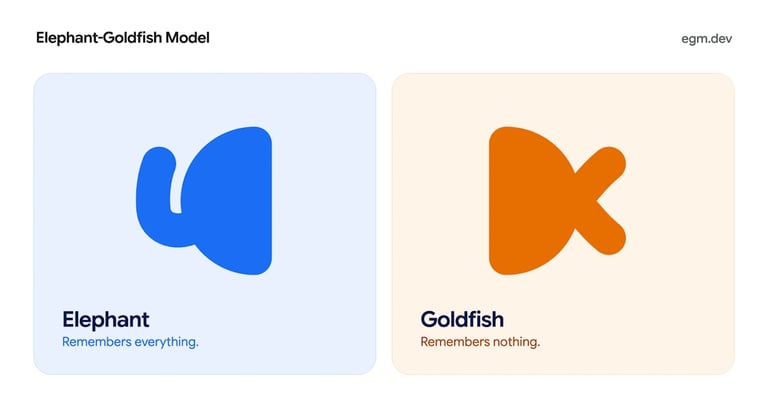

The framework aims for AI to produce correct code on the first try with humans guiding design decisions.
Google open-sourced the Elephant-Goldfish Model (EGM) plugin under the Apache 2.0 license to blend AI-assisted software development with human coding and address reliability issues in AI-generated code.
The design enforces structured reviews and project memory to reduce slop and bugs, preventing context collapse and blind spots.
Author Sofia Elizabella Wyciśl̄ik-Wilson provides the article and related bio.
The process unfolds in three phases: egm-brainstorm for no‑code debate and assumption testing, egm-draft to produce a Markdown design document with problem, plan, alternatives, and file changes, and egm-review where Goldfish reads, explains, and hunts edge cases and dependencies.
Security considerations can be added by introducing a security-minded Goldfish, though reviewers do not automatically flag security flaws unless requested.
The release includes customizable Markdown rules, defined subagent personas, and structured review workflows; Antigravity is the initial target environment with other IDEs planned.
The goal is to transform AI from an unpredictable tool into a dependable design-and-implementation partner, boosting reliability as much as speed.
EGM automates governance of its lifecycle, including context transfer between Elephant and Goldfish, validation loops, and rendering of design documents.
EGM pairs two roles: Elephant as a long-term, no-code design partner with project memory, and Goldfish as context-free reviewers validating blueprints for edge cases and clarity; Elephant focuses on macro design, while Goldfish checks micro-details.
EGM uses two session types—Elephant (context-rich, long-horizon design, no code) and Goldfish (stateless validation of specifications)—to guide development.
The problem addressed: generative AI code can be fast but leads to auto-scaling bugs, context loss, and code slop, undermining reliability.
Summary based on 3 sources
Get a daily email with more AI stories
Sources

Help Net Security • Oct 26, 2026
Google open-sources the Elephant-Goldfish Model plugin its engineers use to catch AI coding mistakes
BetaNews • Oct 26, 2026
Google open sources its Elephant-Goldfish Model plugin for AI coding - BetaNews
Open Source For You • Oct 26, 2026
Google’s Elephant-Goldfish Model Restores Reliability to AI Coding - Open Source For You