Google Launches Project Suncatcher to Test AI Operations in Space, Eyes 2027 Satellite Constellation
October 30, 2026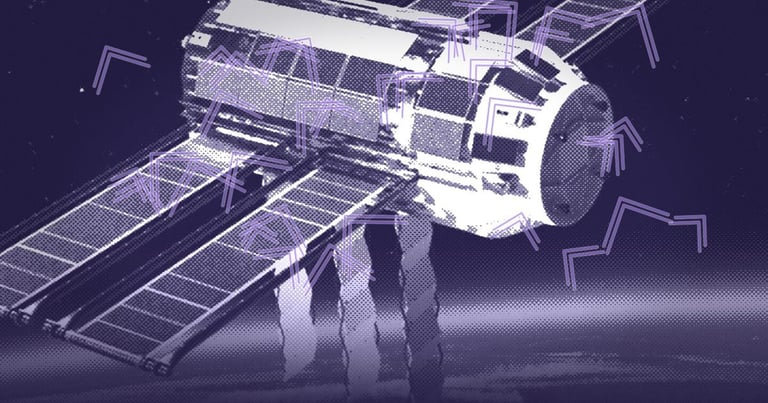


Google unveils Project Suncatcher, a prototype satellite program to study AI operations in space, highlighting a milestone by generating the first-ever AI response from an orbit-based, data-center-class TPU.
Beyond the initial demo, the team has tested space-themed prompts and telemetry workflows, with future work focused on assessing TPU performance under thermal stress and radiation.
The aim is to validate reliable in-space workloads to enable a two-satellite, interconnected system by 2027.
Officials caution that several capabilities remain unproven, including endurance, error behavior, scalability, cost per token, launch costs, bandwidth, and ongoing maintenance.
Gaps between a single successful inference and full production include sustained throughput, radiation-related errors, model update processes, security, regulatory compliance, and the maturity of the on-orbit software stack.
Analysts say orbital compute could reshape AI infrastructure by offering a ground-independent path, potentially affecting launch economics and radiation-hardened hardware markets, though near-term revenue and a clear commercial path remain unproven.
Critics question the real-world applicability of the stunt car demonstration, citing possible hardware simplifications and components that differ from a standard vehicle.
The inference demo hints at future uses like onboard data reduction to save downlink bandwidth and enable autonomous operation for high-latency missions, but details on sustained deployment, security, regulation, and multi-tenant use are still unspecified.
Google’s broader investment context ties orbital compute to its capital expenditure and advertising-driven revenue, with long-run cost dynamics influenced by launch economics and energy considerations.
Watch for signals such as long-duration data, error-rate reporting, power and cooling figures, additional workloads, follow-on satellites, and potential customer use cases, while no official commercial path has been announced.
The coverage notes speculative links to public figures in space and tech narratives, ending with a sense of shifting, uncertain narratives about the future of space-based AI.
Market context shows Alphabet stock movement around the announcement, with SpaceX also reacting, reflecting investor sensitivity to space-led AI ventures.
Summary based on 41 sources
Get a daily email with more Tech stories
Sources
TechCrunch • Oct 30, 2026
Google’s first data center satellite is online and writing poetry
The Verge • Oct 30, 2026
Google’s satellite AI server transmits its first response to Earth
Google • Oct 30, 2026
We’ve received our first response from the Project Suncatcher prototype satellite.
LavX News • Oct 31, 2026
Google's orbital AI sends expensive haiku from space