Google Launches Project Suncatcher to Test AI Operations in Space, Eyes 2027 Satellite Constellation
October 30, 2026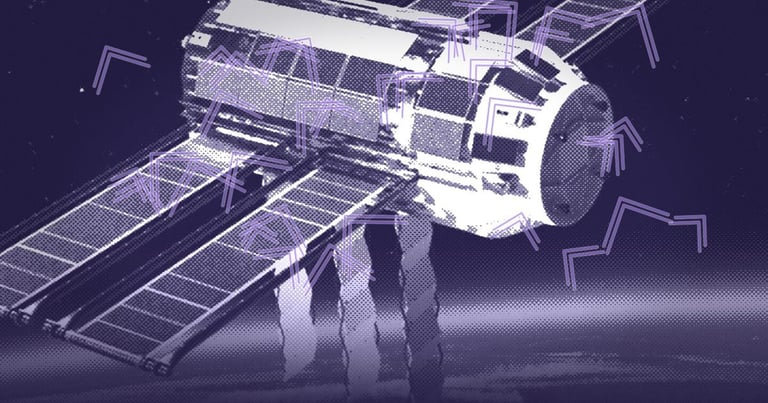


Google unveils Project Suncatcher, a prototype satellite mission to study AI operations in space, marking a milestone with the first-ever AI response generated by an orbit-based, data-center-class TPU.
Beyond a simple demo, the team conducted space-themed tests and telemetry prompts, with plans to evaluate TPU performance under thermal stress and radiation.
The program aims to validate reliable in-space workloads to enable a twin, interconnected satellite constellation by 2027.
Despite the milestone, questions linger about endurance, error behavior, scalability to multiple nodes, economics per token and launch costs, bandwidth, and ongoing maintenance.
Analysts note gaps between a single successful inference and production deployment, including sustained throughput, radiation-related errors, model update procedures, security, regulatory compliance, and on-orbit software maturity, which public reports have not addressed.
Industry analysis suggests orbital compute could reshape AI infrastructure by offering a ground-independent path, possibly affecting launch economics and radiations-hardened hardware markets, though a clear commercial path remains unproven.
The inference demo hints at future applications like onboard data reduction to save downlink bandwidth and enable autonomy for distant missions, but details on security, regulation, and multi-tenant use are still unspecified.
Critics question the real-world value of the stunt, noting possible hardware simplifications and whether the components mirror those in a standard car demonstration.
Observers will look for long-duration data, error-rate figures, power and cooling metrics, additional workloads, follow-on satellites, and potential customer use cases, though no commercial path is announced yet.
Alphabet’s investment context shows broad capital expenditure and ad-driven revenue underpinning orbital compute efforts, with ongoing questions about launch costs and energy economics influencing mid- to late-2030s feasibility.
Public disclosures lack specifics on TPU generation, chip count, satellite altitude, power budget, mission cost, and exact dates beyond “this week.”
Summary based on 40 sources
Get a daily email with more Tech stories
Sources
TechCrunch • Oct 30, 2026
Google’s first data center satellite is online and writing poetry
The Verge • Oct 30, 2026
Google’s satellite AI server transmits its first response to Earth
Google • Oct 30, 2026
We’ve received our first response from the Project Suncatcher prototype satellite.
LavX News • Oct 31, 2026
Google's orbital AI sends expensive haiku from space