Incheon Airport Expands AI Innovations for Enhanced Safety and Efficiency by 2030
November 1, 2026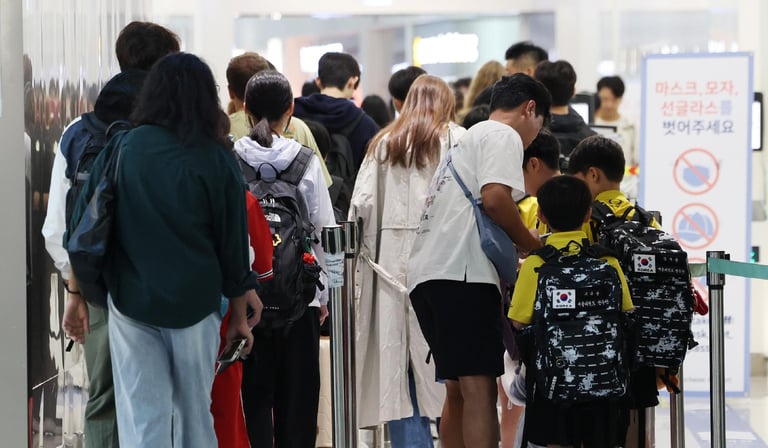

Incheon International Airport is expanding its deployment of artificial intelligence across safety management, passenger assistance, and congestion forecasting to transform operations.
Using AI and big data, the airport forecasts passenger congestion and provides wait-time estimates for departure halls, security, and immigration on airport displays and through private platforms like Naver and Kakao to help travelers plan and keep peak-period operations smooth.
Experts stress the importance of data management and security as AI use grows, calling for standards on access rights, data retention, and external connections.
The airport plans a phased rollout through 2030 of an AI-based work environment, digital twins, and personalized digital terminals to boost efficiency while preserving safety and security.
An AI-based aviation safety management system analyzes real-time video to detect hazards, abnormal signs, and factors affecting flight operations such as low visibility and lightning, automatically alerting staff.
The airport notes the need to measure concrete benefits—such as the accuracy of hazard detection, effectiveness of congestion forecasts, and the impact of robots on passenger experience—to quantify outcomes.
The Aviation AI Innovation Hub project aims to test AI technologies and attract related companies, including plans for a 5-MW GPU farm and a 40-MW-class data center to support airport operations, logistics, and security.
Robots deployed in early 2024 and 2025 assist passengers with self-check-in, information, patrols, and language-supported services, with some using generative AI for multilingual guidance on facilities, flights, and congestion.
Summary based on 1 source