Anthropic Launches Faster Claude Models, but Costs, Safety Limits and Benchmark Claims Need Scrutiny
November 9, 2026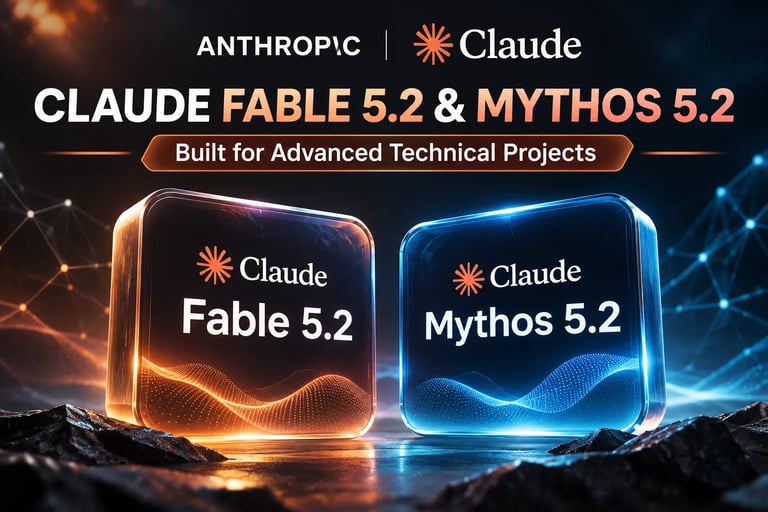

Anthropic released Claude Fable 5.2 for public use and made Claude Mythos 5.2 available to approved organizations in cybersecurity and life sciences, touting gains in coding, reasoning, research and other technical work, with responses up to 30% faster than their predecessors.
The split-access launch treats safety as an access tier: the more restricted Mythos is not broadly released, an approach that may limit misuse but complicate comparisons between benchmark results.
Anthropic lowered standard token prices from $10 to $8 per 1,000 input tokens and from $50 to $40 per 1,000 output tokens, though those rates apply to a throttled version; the lower prices target the costs of intensive coding, review, testing and automation.
Benchmark results suggest strong capabilities but come with trade-offs: Fable led in 13 of 15 vendor comparisons, while Carbon won one business-automation test and Opus narrowly beat Fable in Artificial Analysis’ Briefcase ranking; Artificial Analysis also rated the model among the strongest for intelligence but near the bottom for cost, speed and verbosity.
The headline token price is only part of the bill, since retries, testing, delegation and effort settings can raise total costs; one top-effort Fable task cost about $26.50, roughly 2.6 times as much as Opus 5.5, so teams should test real work and track accepted fixes, failed attempts, reviewer time and regressions.
Those comparisons are not guarantees of real-world performance: tools, evaluation harnesses, effort settings, grading, trial counts and statistical uncertainty all matter, and Kingy did not independently run the evaluations.
At launch, benchmark methods had not been independently reproduced; both models have a one-million-token context window, while Fable supports up to 128,000 output tokens and has a June 2026 knowledge cutoff.
Most benchmarks and demonstrations came from Anthropic and selected partners, leaving independent researchers to test the claims; restricting Mythos may reduce misuse, but also limits outside scrutiny and access to its strongest capabilities.
Anthropic’s system card says most predeployment evaluations were internal, some used earlier model snapshots or disabled safeguards, and external testers did not review the announcement or necessarily endorse its claims; it also acknowledges research weaknesses, including poor ideas, excessive technical detail, overstated efficacy and failures of agent self-review.
A reported 76.3% result measures rediscovery of documented vulnerabilities, not the ability to find previously unknown zero-day flaws.
Data handling is a key caveat for businesses: standard Fable API use requires 30-day retention unless zero retention is expressly authorized, while eligible customers can use zero-data-retention arrangements; Anthropic’s enterprise privacy and monitoring options are in private beta, and customers should confirm terms before submitting sensitive information.
Even as AI systems take on longer technical workflows, autonomous agents still need human oversight because reliability, coordination across enterprise tools, legacy systems and adherence to business requirements remain unresolved challenges.
Summary based on 107 sources
Get a daily email with more Tech stories
Sources

Amazon Web Services • Nov 9, 2026
Introducing Claude Fable 5.2 on AWS | Amazon Web Services
Yahoo! Finance • Nov 9, 2026
Anthropic debuts Claude Fable 5.2 and Mythos 5.2 models as IPO nears
TechCrunch • Nov 9, 2026
Anthropic releases new Mythos and Fable models amid RSI concerns
The Verge • Nov 9, 2026
Anthropic launches new Claude Fable and Mythos 5.2 models