Fake ICE Videos Rack Up Millions of Views as Experts Warn of Real-World Harm
November 9, 2026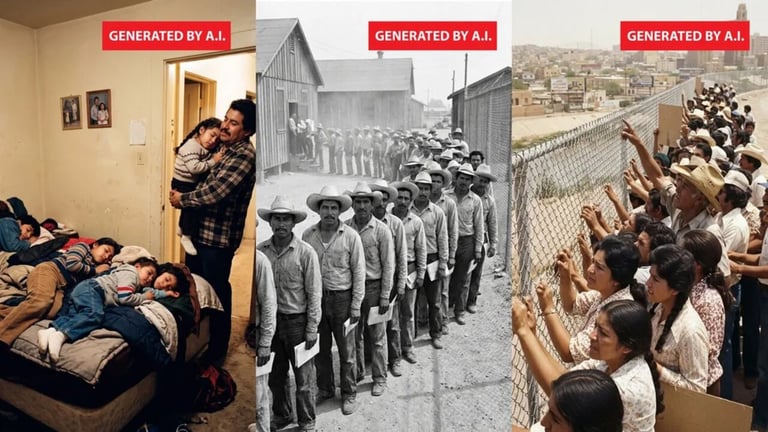

AI-generated videos falsely portraying confrontations between the public and ICE agents have drawn millions of views on Facebook, with an account identified as Mike Wayne posting thousands of clips across Facebook and Instagram and accumulating tens of millions of views.
The fabricated scenes include a female NYPD officer removing an agent’s mask and a woman striking an agent; visual and audio inconsistencies expose some clips as fake.
The videos circulate amid intense public attention to immigration enforcement, including the January 2026 shootings of Renee Good and Alex Pretti during Operation Metro Surge in Minnesota, and Jeremy Carrasco warns that fabrications can obscure real dangers and confusion around encounters with ICE.
Carrasco says the clips give viewers a false impression of how ICE encounters and legal protections work, while the accounts may be chasing attention without regard for the harm they cause.
Misinformation has expanded on Meta platforms since the company dismantled its fact-checking and content moderation program after the 2024 presidential election; Mark Zuckerberg described the resulting increase in harmful content as a trade-off.
Meta’s Oversight Board has called the company’s deepfake rules inadequate and recommended steps such as reducing the reach of high-risk posts and adding warning screens.
Latino communities face particular exposure because Spanish-language content receives fewer moderation resources, many people get news through social media, and false claims can travel through trusted family and community networks; an Avaaz study found Spanish-language misinformation was flagged about 30% of the time, compared with about 70% for English-language content.
The same platforms also host AI-generated pages that distort Chicano, Mexican American and Indigenous history, often presenting images resembling historical photographs without AI labels; three named pages have hundreds of thousands of followers collectively, and Meta’s engagement-based recommendations can amplify their posts.
Historian Santos Felipe Ramos says these accounts exploit cultural pride and Indigenous heritage, spread false narratives and displace human voices and cultural exchange; he calls for structural accountability and stronger connections beyond online platforms.
One tool for tracing digital media is C2PA, an open standard founded in 2021 by Adobe, Arm, BBC, Intel, Microsoft and Truepic that embeds tamper-evident information about a file’s origin and editing history, though experts say platforms must do more and Ramos also urges legislation and community pressure.
Political scientist Marisa Abrajano says generative AI has made realistic fake images and videos harder to identify, even for informed users, while Carrasco recommends trusting news organizations that verify media rather than reposts and meme pages.
Summary based on 1 source
Get a daily email with more AI stories
Source

gulflive • Nov 9, 2026
AI-generated ICE videos target Latino communities on Facebook