Asia Races to Build AI Infrastructure as Global Spending Tops $1 Trillion
November 10, 2026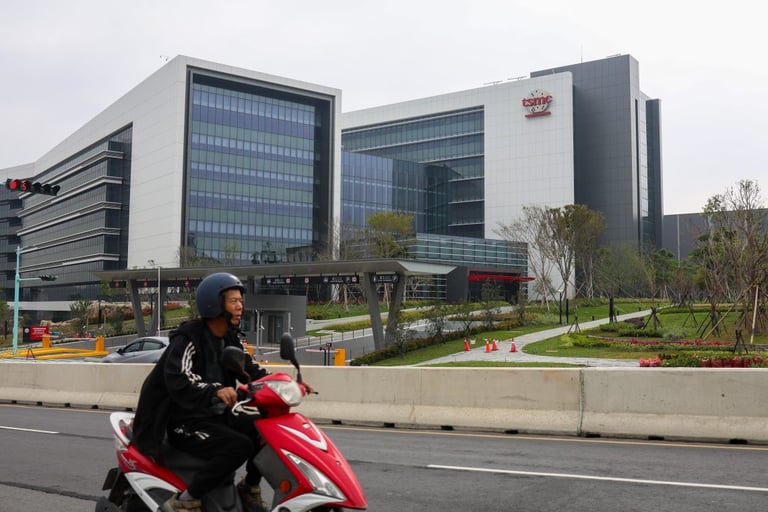

Global spending on AI and related industries is expected to top $1 trillion in 2026, and competition between the U.S. and China is pushing Asian countries to build out their own infrastructure and manufacturing capacity.
Asia is at the center of that buildout: Taiwan, Japan and South Korea supply critical chips, equipment and components, while factories in Taiwan, Malaysia, the Philippines, South Korea and Vietnam help assemble the data-center supply chain.
The demand is already showing up in trade, with Asian exports of servers and server parts rising 50% in 2024 and 110% in 2025; Taiwan was the largest source, following a sharp increase in annual data-center construction by U.S. technology companies beginning in 2023.
Japan is drawing major semiconductor investment, including Micron’s planned $9.6 billion investment in AI memory-chip production and a $31 billion memory-chip partnership announced by Kioxia and Sandisk, while the government backs the domestic Rapidus advanced-logic-chip program.
Japan is also leaning on strengths in semiconductor equipment, production chemicals and financing: its 2026 Growth Strategy prioritizes AI and semiconductors, including robotics, domestic chipmaking and specialized AI, and Tokyo proposed more than $3 billion for AI transformation.
South Korea is positioning itself around high-bandwidth memory chips, with Samsung and SK Hynix agreeing to invest $520 billion over five years in new chip production across the Korean Peninsula.
AI-related technology exports contributed at least a quarter of South Korea’s GDP growth over the previous year, and its 2026–2028 AI Action Plan aims to make the country one of the world’s top three AI leaders, backed by a 2026 public budget exceeding $7 billion and a target of $22 billion in additional private investment.
Taiwan’s GDP growth rose from 1.5% in 2023 to 13% in 2026, while its 2025–2028 Ten AI Initiatives plan targets domestic computing, software, talent, silicon photonics, robotics and quantum capabilities; Taipei allocated about $1 billion to the plan in 2026 and about $330 million to AI start-ups.
U.S. companies are also scaling up in the region: Amazon Web Services plans to invest more than $14 billion in Japan and $33 billion across Southeast Asia by 2039, while Nvidia plans a Taiwan headquarters, spending across the island’s AI supply chain and a data center with Foxconn.
The article expects investment in Asia’s AI supply chain—including energy—to continue, with Japan, Taiwan and South Korea competing in physical AI, manufactured products and AI software exports; it sees a slowdown from U.S.-China rivalry as less likely because AI investment remains attractive and manufacturing and exports matter to Asian economies facing population and workforce declines.
Summary based on 1 source
Get a daily email with more AI stories
Source
GIS Reports • Nov 10, 2026
Asia not riding but building the AI boom – GIS Reports