Pakistan Targets 1 Million AI-Trained Youth as It Pushes for Digital Growth and Sovereignty
November 11, 2026

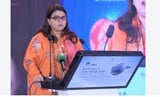
At the Margalla Dialogue on November 11, 2026, Shaza Fatima Khawaja said AI is more likely to transform work than simply eliminate jobs, and that people using AI could be up to 100 times more productive than similarly skilled people who do not.
She cited projections that AI could become a $4.8 trillion sector by 2033 and affect about 40% of global employment, warning that the widening gap between workers’ skills and changing job requirements may be a bigger challenge than job losses alone.
Khawaja said Pakistan wants to turn rapid technological change into economic growth and national development while preserving its technological sovereignty, identity and values.
To prepare its workforce, Pakistan aims to train one million young people in AI and produce at least 10,000 AI PhDs over five years; the government is also seeking to improve startup access to capital through a proposed Fund of Funds backed by the World Bank and other development partners.
A previously announced $1 billion AI commitment is intended to support infrastructure, skills, innovation and connectivity, including sovereign computing capacity and a shared AI computing system, alongside private-sector projects such as the proposed 8.5-megawatt Sky 47 data centre.
Khawaja called for international partnerships, open-source AI models and fairer access to computing infrastructure, and said Pakistan is participating in AI governance forums including the UN AI Digital Compact and the Digital Cooperation Organization.
She argued that many Global South countries have had little influence over international AI frameworks and should be included more fully in global AI governance.
The Digital Nation Pakistan Act established the Pakistan Digital Authority, which is preparing a National Digital Master Plan; the government is also developing a National Data Governance Policy and piloting a National Data Exchange Layer, with an emphasis on data protection, responsible technology use and human accountability.
Khawaja said more than two million people had obtained verifiable digital credentials through the National Database and Registration Authority, while the RAAST payment system was being developed with the State Bank of Pakistan.
She reported that internet speeds in Pakistan had risen 60% over two and a half years, spectrum capacity had grown from 274 MHz to more than 750 MHz, and fibre-to-the-home coverage had expanded from fewer than three million to more than six million house passes, alongside new submarine cables and 5G.
Nearly 1.8 million people had subscribed to 5G services.
Khawaja said cybersecurity is being strengthened through a whole-of-government approach, citing Pakistan’s ranking among the top 40 countries in the 2024 ITU Global Cybersecurity Index and describing the May conflict with a neighbouring country as involving cyber operations alongside conventional military action.
Summary based on 5 sources
Get a daily email with more AI stories
Sources

The Express Tribune • Nov 11, 2026
AI must not deepen inequality
Islamabad Post • Nov 11, 2026
AI to become $4.8tr global economy by 2033: Shaza Fatima
Mettis Global Link • Nov 11, 2026
Pakistan targets 1m AI-skilled youth, global market eyes $5tr