US AI Chip Rules Put Southeast Asia’s Data-Centre Boom Under Pressure
November 18, 2026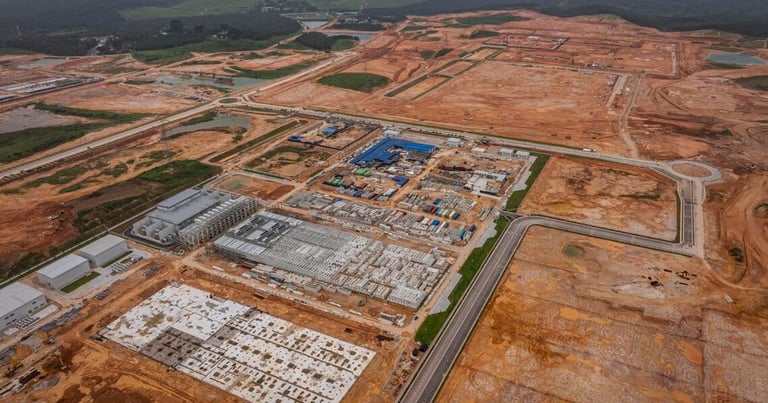

The rules could weaken the case for data-centre expansion across the region, especially in Malaysia, the biggest beneficiary of the build-out; Singapore has about 1.6 gigawatts of capacity across more than 70 facilities.
New US interim rules on advanced AI chips and access to computing resources are putting Southeast Asia’s data-centre boom under pressure, particularly its role as a source of capacity for Chinese companies.
Introduced by the US Commerce Department’s Bureau of Industry and Security on November 16, the rules require licences for certain advanced-chip exports to Singapore, Malaysia, Indonesia, Thailand and Brazil over concerns about diversion; qualifying US-headquartered customers are exempt if they meet reporting requirements.
The framework also covers remote access to advanced computing resources and overseas data centres serving Chinese companies, while exempting commercial recommendation systems used by online retailers and social media platforms. It is not a blanket ban: approval depends on the destination and end user.
Existing facilities serving restricted customers have 90 days to comply, and uncertainty over licence approvals could disrupt both the use of current capacity and plans for new investment.
The measures also bar Chinese chip designers from using foreign foundries such as Taiwan’s TSMC and South Korea’s Samsung, while targeting routes used to divert chips and overseas data-centre capacity to China.
Together, the restrictions could deepen the divide between US- and China-aligned technology ecosystems and make access to computing power a more contested strategic issue.
Markets reacted quickly: Southeast Asian data-centre and chip supply-chain shares fell on Tuesday, with Malaysian firms MN Holdings and Critical Holdings each down nearly 20 per cent and YTL Power down nearly 10 per cent; Singapore’s Frencken and AEM also declined.
Charu Chanana of Saxo warned that operators dependent on Chinese customers could face weaker utilisation, pricing pressure and delayed expansion, while Chinese AI developers may encounter higher costs and slower development.
Maybank nevertheless expects the impact on Indosat to be manageable: NeoCloud would account for about 8 per cent of its forecast FY2027 revenue of 66.7 trillion rupiah, and the company could gain if competitors struggle to secure approvals.
In Indonesia, Indosat Ooredoo Hutchison may face licence delays for GPUs planned for its Zankore AI infrastructure project, which aims for 1 gigawatt of capacity by 2029, including a 200-megawatt first phase in the first half of 2027. The company has targeted about $300 million in NeoCloud revenue in 2027.
Indonesia faces a balancing act between enforcing US controls and attracting data-centre investors; its surplus power could support development, but the outcome will depend on maintaining both compliance and investment appeal.
Summary based on 4 sources
Get a daily email with more Tech stories
Sources

ET Datacenters
US chip curbs hit Southeast Asia data centre shares
The Straits Times • Nov 18, 2026
New US AI and data centre curbs threaten South-east Asia’s tech ambitions
TNGlobal • Nov 18, 2026
US AI chip curbs could slow Indonesia’s data center ambitions, says Maybank
Asia Tech Review • Nov 18, 2026
US regulation casts shadow on Southeast Asia’s data centre boom