Asus ROG Xreal R1 AR Glasses Launch: 240Hz Gaming and Bose Audio Elevate Virtual Experience
May 15, 2026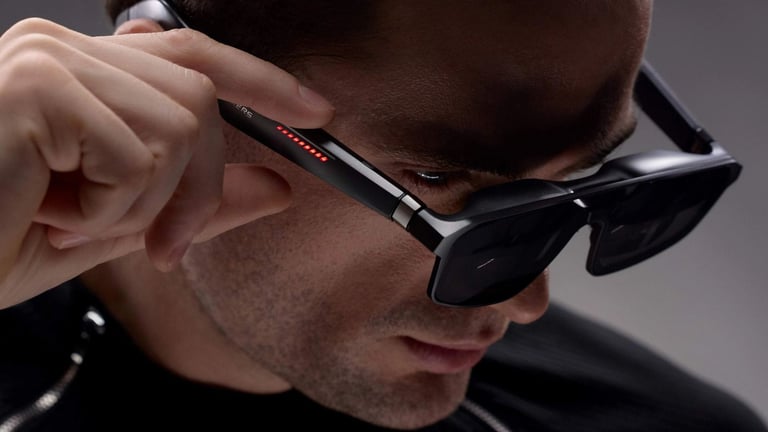


The R1 can connect to phones, tablets, laptops, or any device with display-out support via the Control Dock or other adapters; for the Switch 2, the Control Dock is required due to the canceled Switch-specific Xreal Neo adapter.
Core specs are similar to the Xreal One Pro, but with a sportier ROG design, Bose-tuned audio, a 57-degree field of view, and 3DoF tracking.
The device includes native 3DoF spatial tracking, electrochromic dimming with three tint levels and instant transparency, and Bose-tuned spatial audio for directional sound without headphones.
Author context: Brandon Hill, senior editor at Tom’s Hardware.
Technical specifications list includes Sony 0.55.
An X1 spatial coprocessor powers on-screen menus, supports 3DoF (with 6DoF) and helps reduce latency and motion blur, building on technology from Xreal’s One Series.
A standout feature is the 240Hz maximum refresh rate paired with 1920x1080 resolution, which Xreal claims makes the R1 the world’s first AR glasses to offer 240Hz for gaming.
The glasses project a 171-inch virtual display from compact 0.55-inch micro-OLED panels and support gaming across devices—from PCs and consoles to handhelds and mobile devices via USB-C, aided by the ROG Control Dock for synchronized gameplay tweaks.
The included dock is highlighted as a major advantage for connecting to multiple consoles and PCs, though it adds bulk and reduces portability.
The Asus ROG Xreal R1 AR glasses are available for pre-order at $849, with Best Buy taking orders and the Xreal store opening pre-orders on May 17.
The system is plug-and-play with the ROG Ally and is optimized for non-gaming use like personal cinema experiences or scrolling content.
Overall, the R1 targets gamers seeking high-refresh-rate AR gaming with multi-device docking, but at the cost of portability.
Summary based on 10 sources
Get a daily email with more Tech stories
Sources

Mashable • May 15, 2026
You can pre-order Asus ROG and Xreal's R1 Gaming AR Glasses
Gizmodo • May 15, 2026
The World’s First 240Hz Video Smart Glasses for Gaming Aren’t Cheap
CNET • May 15, 2026
Asus and Xreal's $849 Gaming Display Glasses Are Available for Preorder
Engadget • May 15, 2026
The ROG Xreal R1 AR Gaming Glasses Are Now Available To Pre-Order For $849