RP1 Unveils Artemis: The World's First Native Metaverse Browser with Open-Source Sneeze Engine
July 9, 2026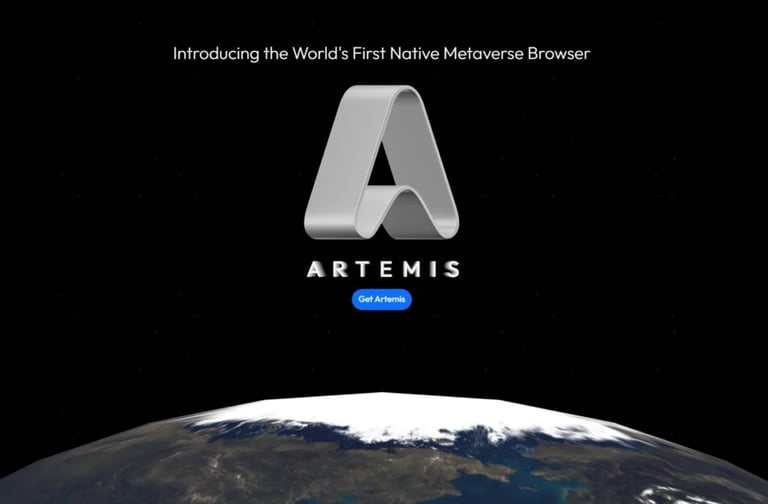

Context: Sneeze was released at AWE 2026 and was developed under the Open Metaverse Browser Initiative within the Metaverse Standards Forum.
Sean Mann, RP1 Co‑Founder and CEO, frames Artemis as filling a browser-like gap for the metaverse, emphasizing the open-source approach that enables multiple browsers to share the same foundation.
RP1 has launched Artemis, hailed as the world’s first native metaverse browser, built on the open-source Sneeze engine.
Artemis lets users access spatial experiences from any device without separate app installs and can host spatial content on an organization’s own infrastructure.
Sneeze is open-source, embedded into browsers or devices, and designed for spatial computing with features like multi-origin 3D scene composition, proximity-based loading, real-time co-presence, and cross-device rendering.
A metaverse browser connects to a spatial fabric anchored to real or virtual space, offering services such as AI assistants, safety overlays, navigation, equipment monitoring, and training, all running in isolated sandboxes with strong security.
Artemis is available for download now, with additional capabilities and a broader showcase planned for the Augmented Enterprise Summit in October 2026.
RP1 emphasizes data ownership and hosting on an organization’s own servers, promoting an open, vendor-agnostic foundation via Sneeze so enterprises can deploy spatial operations on infrastructure they control.
Developers can use Artemis to create limited spatial fabrics, navigate to fabrics via URL, and load content from multiple operators into a single scene, with embedded spatial services during development.
Summary based on 1 source
Get a daily email with more AR/VR stories
Source
Auganix.org • Jul 9, 2026
RP1 Launches Artemis Metaverse Browser for Spatial Experiences