Australia's Housing Challenge: Government Aims for 1.2 Million Homes Amid Rising Costs and Delays
July 14, 2025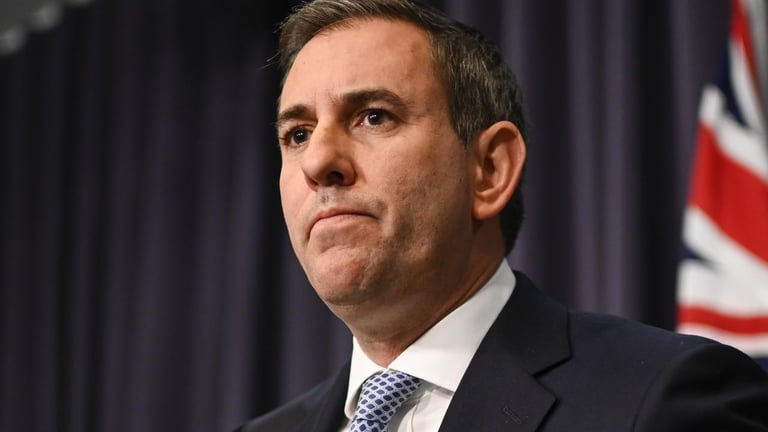

Data from the Institute of Public Affairs shows that the time to build a freestanding home has increased by 50% from 8.5 to 12.7 months between 2014 and 2024, with building material costs rising by 53% in the same period.
Housing Minister Clare O'Neil emphasized the need to cut red tape and improve planning policies to boost housing supply, with an upcoming Productivity Roundtable set to address these issues.
In its first year, the housing initiative is already 55,300 homes behind schedule, highlighting the challenges in meeting the ambitious target.
Chalmers responded to leaked Treasury documents, stating he would not release the full brief but is focused on addressing the federal budget's structural deficit through spending cuts, savings, and potential tax increases.
Opposition spokesperson James Paterson criticized Labor's housing strategy, noting that under the previous Coalition government, an average of 190,000 homes were built annually, compared to Labor's 170,000.
The Treasury's concerns about meeting housing targets were publicly revealed in an incoming brief, which also suggested that tax increases might be necessary to ensure fiscal sustainability.
Australian Treasurer Jim Chalmers reaffirmed the government's commitment to building 1.2 million homes by June 2029, despite warnings from Treasury that current policies might not achieve this target.
Chalmers remains confident that the housing goal can be met by 2030, even as Treasury officials warn that existing strategies may fall short.
The government has implemented changes to tax arrangements in the build-to-rent sector and introduced a two-year ban on foreign buyers to help stabilize the housing market.
Recent Treasury documents, obtained via Freedom of Information, reveal that the National Housing Accords' targets are unlikely to be met, prompting a review of Housing Australia.
In 2023, only 173,000 homes were completed nationwide, underscoring the gap between current output and the target.
Chalmers described housing shortages as a critical economic challenge and stressed the importance of intensified efforts to reach the housing goal.
Before the election, Labor committed $10 billion to build 100,000 homes over eight years for first-time buyers and expanded schemes requiring only a 5% deposit.
Economists from Deloitte Access Economics estimate that fewer than 1 million homes will be built by 2029, indicating that the government is likely to fall short of its 1.2 million target.
The Housing Industry Association states that achieving the target requires a 50% increase in construction levels compared to 2024, with an average of 240,000 homes needed annually.
Chalmers expressed optimism that collaboration among government levels and stakeholders could still help meet the housing target, though he acknowledged the challenge.
The upcoming Productivity Roundtable in August will focus on improving resilience, productivity, and sustainability in the housing sector, involving business leaders, unions, and regulators.
Summary based on 2 sources
Get a daily email with more Australia News stories
Sources
The Guardian • Jul 14, 2025
Jim Chalmers insists Labor can meet target of 1.2m new homes despite department warning
news.com.au — Australia’s leading news site for latest headlines • Jul 14, 2025
Chalmers backs ‘ambitious’ 1.2m homes goal