Emanuel and Morrison Urge Allied 'Anti-Coercion Coalition' to Counter China's Influence and Sanctions
July 23, 2025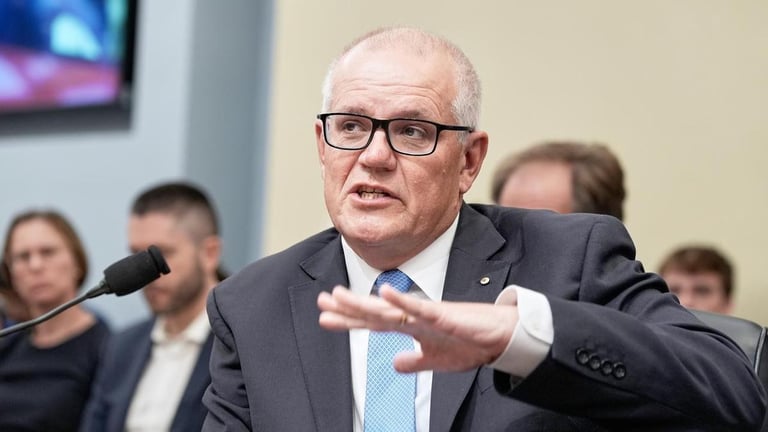

Rahm Emanuel, accompanying Morrison, called for a collaborative 'anti-coercion coalition' among allies to counter China's influence, citing China's economic sanctions on Australia as a case study.
Emanuel emphasized that China's military intimidation towards Australia persists, despite changes in their diplomatic tactics.
He stressed that strong alliances require robust leadership, particularly from the United States, to succeed in countering China's influence.
Morrison's remarks followed Prime Minister Albanese's recent state visit to China, where both leaders discussed opportunities to deepen bilateral trade, tourism, and research ties.
Morrison urged Australia to increase its defense spending to 3.5% of GDP to better address evolving security threats from China.
Prime Minister Albanese acknowledged ongoing disagreements with China but emphasized a stance of cooperation where possible, while prioritizing national interests.
He recounted Australia's economic repercussions from China's sanctions on products like wine and barley following calls for an independent COVID-19 origin investigation.
Morrison stressed that economic collaboration is as vital as security cooperation in countering China's threats.
He highlighted the importance of allied solidarity in standing up to the CCP, noting that economic costs should be shared and that engagement with China does not signal a change in its aggressive objectives.
Australia has invested $1.6 billion in the AUKUS submarine deal, though its future remains uncertain as the Pentagon evaluates its strategic impact.
He criticized the Australian government for underfunding defense in favor of the AUKUS submarine deal, arguing that other defense priorities should not be sacrificed.
Morrison, now serving in advisory roles after leaving office, appeared before Congress in a personal capacity to discuss defense and space initiatives.
Morrison criticized the Albanese government for not improving relations with China, claiming Beijing has exploited leadership changes to intensify coercive tactics despite recent diplomatic efforts.
Morrison expressed concern that Australian public sentiment favors economic ties with China over security threats, which he views as dangerous complacency encouraged by the CCP.
Despite trade bans hurting Australian farmers, Morrison supported standing firm against China, emphasizing the importance of resilience in national security.
Morrison noted that after 2022, China shifted from coercive tactics to a more diplomatic approach, using charm and flattery, but still maintaining military intimidation.
He proposed that US allies could work together to develop alternative supply chains for rare earth elements crucial for technology.
Morrison pointed out that China's main goal remains to weaken US influence in the Indo-Pacific and challenge regional security efforts, despite diplomatic style changes.
A 2025 Lowy Institute poll shows that 50% of Australians now see China more as an economic partner, while 47% view it as a security threat, a notable shift from previous years.
During Albanese's recent visit to China, diplomatic engagements focused on fostering a friendlier bilateral relationship and economic cooperation.
Summary based on 4 sources
Get a daily email with more World News stories
Sources
The Guardian • Jul 23, 2025
Scott Morrison tells US Australia risks going to sleep on China threat after diplomatic ‘charm and flattery’
The Sydney Morning Herald • Jul 23, 2025
Australians ‘going to sleep’ on China threat, Morrison tells US Congress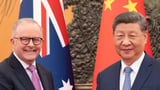
news.com.au — Australia’s leading news site for latest headlines • Jul 23, 2025
‘Charm’: Warning after Albo’s China jaunt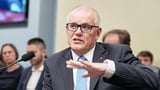
The Nightly • Jul 23, 2025
Scott Morrison tells US congress to strengthen aliances against China’s economic pressure