Study Links Colonial Land-Use Changes to Increased Wildfire Risk in Australia
October 7, 2026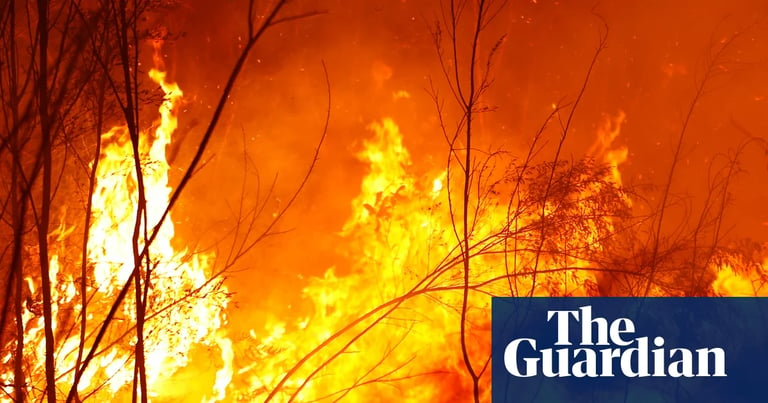


A study combining Aboriginal knowledge with palaeoecological data shows that colonisation-driven land-use changes in south-eastern Australia created a catastrophic wildfire loop that raises bushfire risk under current climate conditions.
Nature-backed reconstructions over a millennium link the rise of intense, large-scale bushfires to the suppression of Indigenous burning practices after British colonization.
Together, the sources connect wildfire risk to anthropogenic and colonial land-use shifts, highlighting a shift in fire regimes and the role of Indigenous fire management.
Charcoal analysis reveals a shift to higher-temperature fires from the mid-19th century, signaling a hotter fire regime and greater fuel loads.
Experts caution that dense eucalypt forests are not effective carbon sinks under current management and may release carbon during fires, with the 2019–2020 Black Summer illustrating the risk.
Methodological resources in paleo-fire reconstruction, charcoal analysis, and climate proxies are outlined to understand long-term fire histories and vegetation responses.
Pollen and sediment analyses show forests were open and grassy for about 800 years before ca. 1840, after which eucalyptus dominance and woody shrubs rose, correlating with more intense fires.
Between 1830 and 1860, Indigenous burning ceased and settlers introduced grazing, leading to shrub invasion, hotter and more frequent fires, and a rapid increase in tree cover to around 40% as shown by charcoal and pollen records.
The discussion highlights the Black Summer fires of 2019/2020, feedbacks of suppressed fire leading to greater severity, and the potential for pyrodiversity through Indigenous management.
Researchers describe a catastrophic wildfire loop where hotter fires promote flammable vegetation, which in turn fuels even more intense fires.
Scholars advocate re-engagement with Aboriginal fire groups and broader restoration of thickened bushland as part of sustainable fire management in a warming climate.
Independent fire scientist reviews concur that the loss of traditional fire management significantly shaped landscape changes, viewing the research as a step toward broader landscape management reform.
Summary based on 5 sources
Get a daily email with more World News stories
Sources
New Scientist • Oct 7, 2026
Colonisation of Australia led to big increase in wildfire danger
Nature • Oct 7, 2026
Australia’s bush fires got worse after British colonization — this is why
Nature • Oct 7, 2026
Australia’s current wildfire crisis linked to colonial land-use change
Kyabram Free Press • Oct 7, 2026
| Kyabram Free Press