Australia's Energy Transition: Batteries Rise, Gas Remains Crucial Amid Renewables Surge
October 12, 2026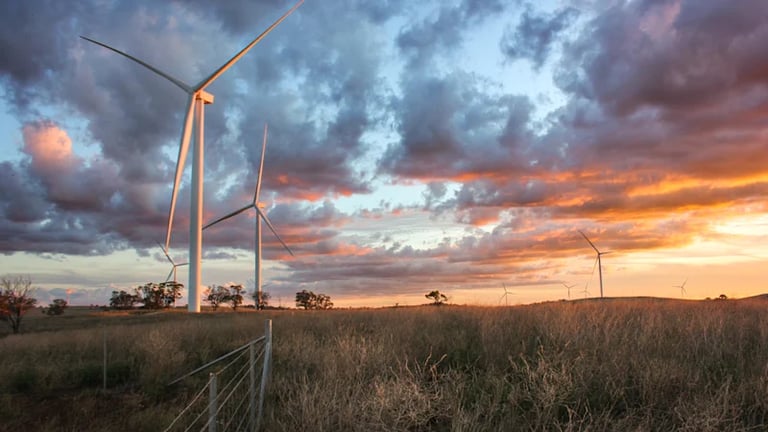

Batteries are increasingly able to shift daytime generation to evening peaks, while gas remains important for rare, longer-duration shortfalls, with CSIRO and AEMO forecasting gas to persist in a reduced but meaningful role through 2050.
Australia’s energy future hinges on coordinated efforts among storage, gas, transmission upgrades, and policy schemes to deliver reliability and affordability.
Renewables now dominate generation, recording a 42.1% share in the National Electricity Market for the June quarter, while gas-fired output falls to its lowest June-quarter average since 2003.
AEMO’s 2026 Integrated System Plan projects two-thirds of remaining coal capacity closing by 2035 and demand doubling by 2050 as electrification expands across transport, industry, and data centers; the optimal path combines renewable energy firmed with storage and gas-backed reliability, supported by upgraded transmission.
Shell contributes to reliability by supplying gas and helping balance the evolving mix of renewables, firming power, batteries, and gas-fired generation to meet demand under varying market conditions.
Near-term gas supply is improving, but Bass Strait decline signals a need for new gas through 2030 in many scenarios; electrification and a federal Capacity Investment Scheme to 2030 underpin about 40 GW of new renewables and storage, with gas providing backup when electrification isn’t sufficient.
The overarching trajectory envisions gas playing a reduced frequency role but remaining crucial on high-need days, as households seek continuous, low-cost power amid a changing generation mix.
Standby power or firming is central to the transition, with batteries handling short daily fluctuations and gas plants covering longer multi-day gaps when weather disrupts renewables.
Summary based on 1 source
Get a daily email with more Australia News stories
Source

The Sydney Morning Herald • Oct 12, 2026
The real backbone of Australia’s energy future