Blockchain Transparency: Key to Solving Crypto Crimes and Recovering Millions
August 31, 2026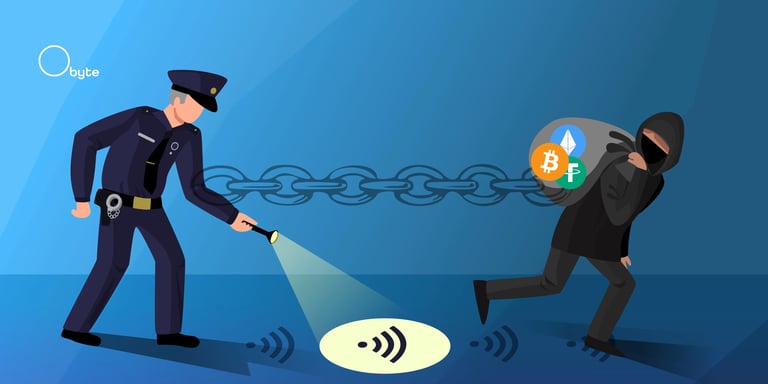


Blockchain transparency enables investigators to trace and recover stolen crypto by linking public ledger data with exchange records, warrants, and traditional detective work.
The Ronin Bridge hack serves as a major example where investigators traced funds and recovered more than $50 million, with about $40 million still frozen as investigations continue.
Public Bitcoin transactions from Silk Road cases helped identify Ross Ulbricht and later allowed authorities to track roughly $1 billion in Silk Road–linked Bitcoin, leading to seizures and arrests.
The Colonial Pipeline ransomware case showed how chain transparency helped recover most of a $4.3 million ransom by tracing Bitcoin to the final owners.
The Welcome to Video operation leveraged Bitcoin’s public ledger to identify and arrest dozens of offenders across 38 countries, rescuing victims and seizing terabytes of material.
An optional discussion introduces transparent-ledger options like Obyte, contrasting transparency with privacy-preserving approaches and noting they can coexist to serve different user needs.
In the Bitfinex hack, investigators linked recovered funds to Ilya Lichtenstein and Heather Morgan through extensive on-chain tracing, resulting in the seizure of tens of thousands of BTC and major prison sentences for money laundering.
The overarching takeaway is that public blockchain transparency is a powerful tool for solving crypto crimes and recovering funds, while privacy features remain important to protect financial freedom.
Summary based on 1 source