Climate Crisis: 4,000 Glaciers Could Vanish Annually by 2030s, Urgent Mitigation Needed
December 15, 2025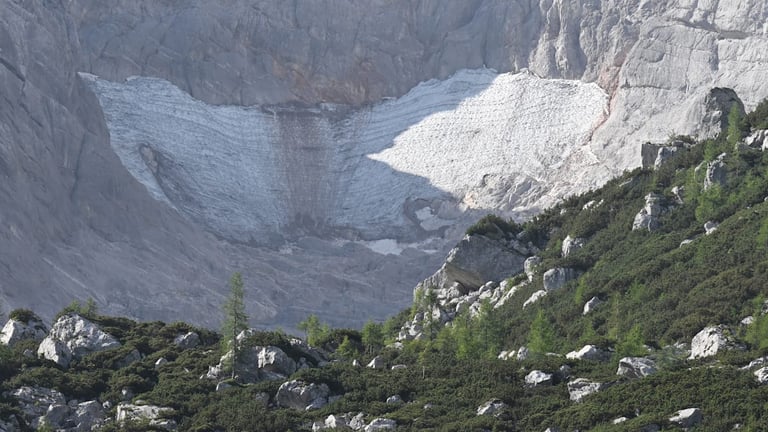


The warming scenario of 4.0°C would drive a peak glacier loss in the mid-2030s to mid-2050s, with as many as about 4,000 glaciers disappearing annually at the peak, and by 2100 roughly 18,000 glaciers would remain globally while Central Europe holds around 20, a fraction of today’s total.
Every glacier matters—from tourism and landscape to culture and regional identity—because even small glaciers contribute to local water supplies and cultural heritage.
Glacier extinction is a meaningful metric alongside mass and area loss, underscoring societal, cultural, and ecological stakes and the urgency of climate mitigation to preserve more glaciers; notably, staying closer to +1.5°C could nearly double glacier survivors by 2100 versus +2.7°C.
Experts acknowledge study limitations, including uncertainties counting small and debris-covered glaciers and data gaps, but maintain that the findings clearly reflect how climate decisions shape glacier futures.
The study emphasizes significant uncertainties in climate-model projections and reiterates that actual glacier loss rates hinge on near-term policy choices and collective action.
The projection uses the RGI v6.0 framework with disappearance thresholds of area less than 0.01 km² or volume under 1% of the initial, smoothing with a five-year filter, and excluding regrowth in overshoot scenarios from surviving status.
Pre-2025 glacier losses and potential undercounting of small glaciers are acknowledged, with data and code shared on Zenodo to support transparency and reproducibility.
The analysis covers more than 200,000 glaciers globally and introduces a framework to quantify glacier extinction timing, with mid-century turning points driven by today’s decisions.
Adaptation ideas include new farming practices, alternative tourism livelihoods, and even artificial glaciers, as tested in places like Kyrgyzstan.
Lander Van Tricht of ETH Zurich stresses the need to know when and where individual glaciers disappear, underscoring predictive value for planning.
Peak-loss dates act as turning points for ecosystems, water resources, and cultural heritage, with downstream communities—about 2 billion people relying on mountain water—urgently needing adaptation.
Scientists modeled glacier persistence by identifying glacial boundaries falling below 0.01 square kilometers or under 1% of their 2000 volume to mark disappearance.
Summary based on 11 sources
Get a daily email with more World News stories
Sources
The Guardian • Dec 15, 2025
Glaciers to reach peak rate of extinction in the Alps in eight years

Nature • Dec 15, 2025
Peak glacier extinction in the mid-twenty-first century
Phys.org • Dec 15, 2025
The Alps set to lose a record number of glaciers in the next decade, study warns