Global Sea-Level Rise Underestimated, Threatening Millions More with Coastal Flooding
March 4, 2026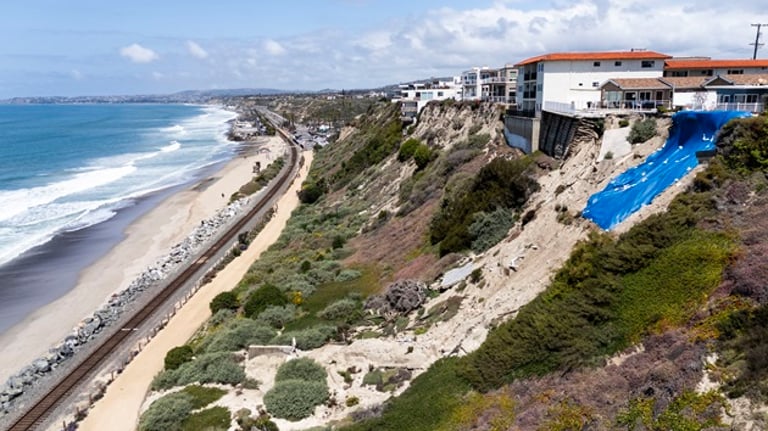


A Nature study finds that global assessments of sea-level rise and coastal risk underestimate ocean surface height by roughly 0.2 to 0.3 meters, potentially exceeding 1 meter in vulnerable regions like Southeast Asia and the Indo-Pacific.
The misestimation stems from simplified geoid models that ignore tides, currents, salinity-driven density differences, regional subsidence, and regional gravitational/rotational variations, causing regional baseline discrepancies.
If sea level rises by a little over 3 feet by the century’s end, corrected baselines could bring about up to 37% more land inundation, threatening 77 million to 132 million more people and complicating planning and funding for climate impact responses.
Independent researchers acknowledge the findings as highlighting underestimation of risks, while cautioning that not all future projection scenarios would be altered.
Policymakers are urged to ensure coastal risk data are locally validated and properly aligned to guide resource allocation and action.
The article notes the study’s Nature publication and discusses verification challenges related to access to the full article.
Only a minority of reviewed studies properly integrated data, with one meeting full data documentation and correct integration, underscoring a broad methodological gap.
Some scientists warn the implications may be overstated for planners, while others see room for methodological improvements and broader recognition of regional differences.
Experts outside the study caution that risk increases could complicate adaptation funding, though some acknowledge the issue is not uniform across regions.
Critics outside the study note that in some regions local planners possess better, region-specific elevation data and planning practices.
The refinement could improve coastal hazard reports and support more effective adaptation or relocation decisions if needed.
Portugal-specific analysis isn’t conducted, but vulnerable zones like the Costa da Caparica, Tagus estuary, Figueira da Foz, and parts of the Algarve could face earlier and greater risks, prompting revisions to municipal plans and investments.
Summary based on 21 sources
Get a daily email with more World News stories
Sources
The New York Times • Mar 4, 2026
Sea Levels Are Higher Than Many Scientists Think, New Study Shows
The Guardian • Mar 4, 2026
Global sea levels have been underestimated due to poor modelling, research suggests
Yahoo News • Mar 4, 2026
The sea is higher than we thought and millions more are at risk, study finds