King Penguins Thrive in Warming Seas, But Future Uncertain Amid Rapid Climate Change
March 11, 2026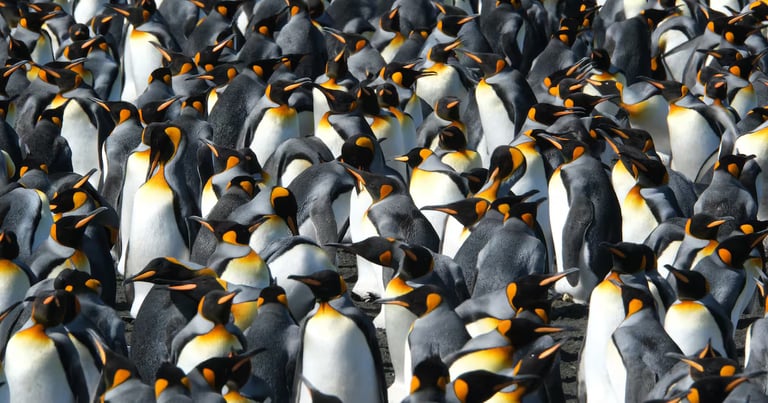

Experts not involved in the study caution that while penguins now seem resilient, faster climate shifts could threaten other species and alter resource dynamics, influencing winners and losers.
Early breeding correlates with higher sea surface temperatures and lower plankton, suggesting an unusual abundance of lanternfish that feed the chicks.
Across a chain of sub-Antarctic islands, king penguins have advanced breeding timing and seen a roughly 40% boost in breeding success in a study of about 19,000 birds.
Yet the Possession Island population appears near carrying capacity, raising questions about redistribution as penguins shift to other islands and colonies expand elsewhere.
Scientists warn the positive trend may be temporary; if the polar front shifts south and food becomes harder to access, populations could decline or collapse.
Overall, this represents a hopeful but fragile short-term outcome for a polar species, with the long-term outlook hinging on oceanic food dynamics.
The large-scale study of 19,000 penguins shows earlier mating and higher reproduction rates, illustrating a rare positive response to climate change.
Some scientists remain optimistic, citing the penguins’ dietary flexibility, including squid, and potential adaptation that could stave off a full collapse.
A new study finds king penguins currently thriving amid warming seas, but warns that their gains could come at the expense of other species and the long-term outlook remains uncertain as environmental change accelerates.
The findings describe a rare, favorable short-term outcome for a polar species, yet emphasize that sustained climate change could reverse this advantage and reshape ecological competition.
On Possession Island, warmer waters are elongating the breeding season and lifting chick survival from about 44% in 2000 to 62% now.
The penguins' flexible breeding window and varied foraging strategies help them cope with warming oceans and shifting prey, contributing to their resilience.
Summary based on 6 sources
Get a daily email with more Science stories
Sources

Yahoo News • Mar 11, 2026
King penguins are the rare species benefiting from a warming world. But that could change
New Scientist • Mar 11, 2026
King penguins are thriving in a warmer climate, but it may not last
The Boston Globe • Mar 11, 2026
King penguins are benefiting from global warming
WDIV ClickOnDetroit • Mar 11, 2026
King penguins are the rare species benefiting from a warming world. But that could change