Victoria Faces $71 Billion Infrastructure Risk by 2070 Due to Climate Change, Urgent Action Needed
May 18, 2026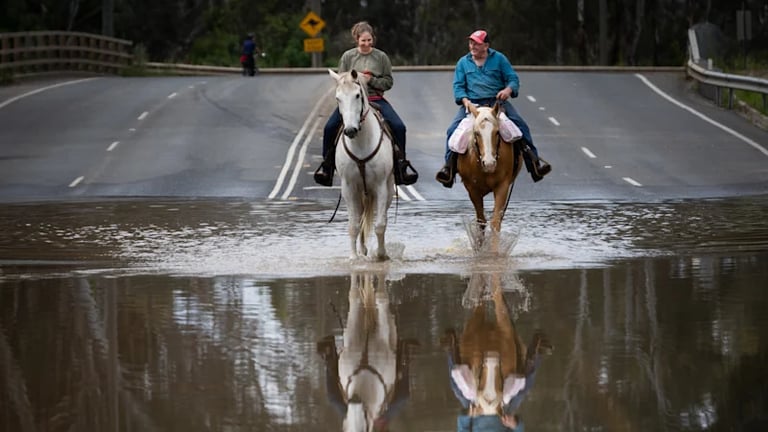


Infrastructure Victoria warns that extreme weather driven by climate change will heighten risks to Victoria’s roads, railways, ports, energy infrastructure and hospitals, with about $57 billion at risk by 2030 and $71 billion by 2070 across roughly $318 billion in analysed assets.
Rail networks face up to $10 billion in risk from extreme heat causing track buckling and delays, with Melbourne, Geelong, and regional corridors most affected.
By 2030, up to $20 billion of road assets could be at risk as floodwaters threaten foundations and force closures, especially around Melbourne and major corridors like the Hume and Princes highways.
The study urges beginning adaptation planning now, noting proactive measures can deliver significant economic benefits and less disruption than waiting for disasters.
A governance question emerges on whether more funds should go toward preventative maintenance and adaptation rather than post-disaster recovery given increasing extreme weather.
Current flood projections are not updated with the latest climate science, affecting the accuracy of flood risk modeling.
Authors stress that many risks can be mitigated through timely, cost-effective actions and funding, such as climate-proofing infrastructure and improving drainage, which reduce future recovery costs.
Preventative maintenance and adaptation are emphasized, including clearing roadside drains and vegetation and upgrading roads with techniques like foamed bitumen stabilisation to reduce washouts and rebuilds.
Historical climate costs are noted, with Victoria’s extreme weather cleanup averaging $2.7 billion annually up to 2016 and floods in 2022 costing $1.8 billion for relief plus $1.7 billion for recovery.
The analysis uses a two-scenario model: 2030 under a low-emissions pathway and 2070 under a high-emissions pathway to assess risk levels.
Under current trends, the report projects higher risk for 2030 and a worst-case scenario for 2070, with heat, fires and floods driving costs higher.
Health assets, including hospitals, face roughly $5.3 billion in risk by 2030, highlighting potential impacts on community health services during disasters.
Summary based on 2 sources
Get a daily email with more Climate change stories
Sources
ABC News • May 18, 2026
The networks we rely on face growing risk from natural disasters
The Age • May 18, 2026
Extreme weather, floods and fires threaten to compound Victoria’s road woes