India's Solar Surge: Aiming for Major Economy Status through Solar-Led Industrialization by 2030
May 31, 2026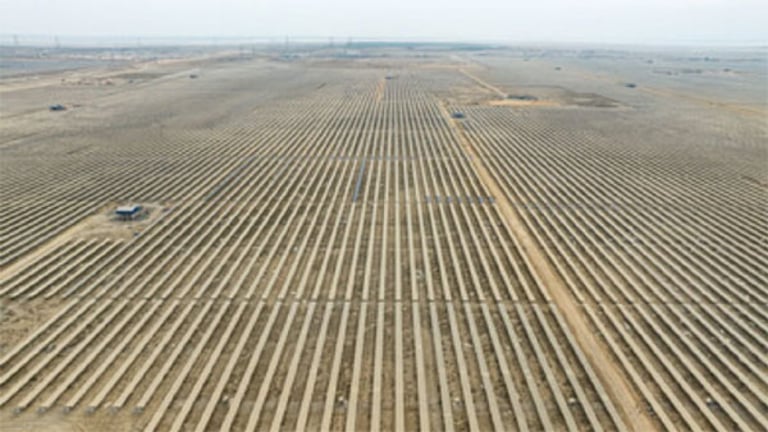


This shift departs from a decade of coal-friendly policy, propelled by falling solar costs, favorable climate, and COP26 momentum that accelerated installations.
India’s 2047 goal to modernize the economy with solar could influence global energy transitions, though success hinges on storage, grid, and land-use management.
Transmission and grid expansion are critical bottlenecks, with more than $100 billion committed to extend the grid by about 29% by 2032 through Green Energy Corridors to cut delivery losses.
Despite high installed capacity, solar’s share of actual electricity delivered remains low due to grid transmission bottlenecks, with 2024 figures showing about 28% of capacity but only 9.4% of power supply.
Land and environmental concerns surround large desert solar installations, prompting debates over wildlife, land use, and agrivoltaics as solutions.
Large-scale storage builds, including pumped hydro with vast identified potential and integrated solar-battery systems, are essential for reliability and night-time power.
India’s solar capacity has surged, surpassing 150 GW by March and heading toward a potential double-rise by 2030, signaling a shift toward a solar-led industrialization that could crown it the first major economy to industrialize primarily on solar power.
Solar is increasingly powering infrastructure and industry, from rail electrification to electric rickshaws, reducing coal dependence, though decarbonizing the steel sector remains a major challenge.
Outdated grids limit desert-to-city solar transmission, with as much as 40% of solar output not reaching customers at times; expansion plans target roughly 29% grid growth by 2032 via Green Energy Corridors.
Storage is central to reliability as costs fall—battery storage has declined about 58% since 2023, enabling around-the-clock solar and government mandates for storage at new solar farms.
Pumped-storage hydro projects and growing lithium-ion storage will underpin 24/7 solar, with planned facilities like a 1.4 GW Gandhi Sagar project and a 3 GW site near Mumbai, complemented by advancing battery storage on new solar farms such as Khavda.
India still relies on imports for key silicon materials and many batteries from China, while efforts are underway to boost domestic manufacturing of solar components and storage tech.
Summary based on 5 sources
Get a daily email with more World News stories
Sources
Yahoo News • May 28, 2026
A sea of 60 million solar panels is taking over India's vast salt desert
Yale E360 • May 21, 2026
A First Among Major Nations, India Is Industrializing With Solar
IANS News • May 31, 2026
India’s solar success could become blueprint for other emerging economies: Report
Daijiworld.com • May 31, 2026
Khavda solar park emerges as symbol of India’s renewable energy transformation