Study Explores Cloud Brightening to Mitigate El Niño, Raises Geoengineering Concerns
July 8, 2026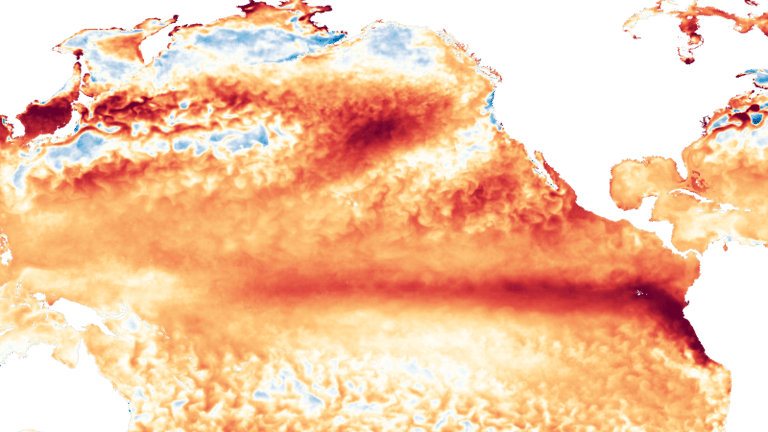


A new study proposes regional marine cloud brightening (MCB) to dampen El Niño effects by deflecting sunlight in the Pacific, potentially reducing its intensity and global impacts.
Scientists suggest that MCB could temporarily weaken strong El Niño events by brightening clouds and reflecting more sunlight, potentially reducing floods and heat.
Experts highlight challenges including technical feasibility (particle sizes and quantities), regional trade-offs, timing and magnitude of unintended shifts in ENSO patterns, and ethical governance questions.
Long-term outcomes are hard to predict; MCB could unintentionally strengthen La Niña or cause other global weather disruptions, with model reliability diminishing beyond two simulated years.
Proponents argue regional geoengineering could mitigate harms if fossil fuel emissions remain high, but it would require careful international coordination.
The article notes geoengineering, including MCB, remains controversial and would not replace emission reductions; it could be a supplementary, carefully governed tool.
A Science Advances study proposes using targeted MCB to weaken a developing El Niño and possibly prevent a super El Niño from forming.
However, deliberate testing of geoengineering carries unknown risks and social implications; any real-world deployment would require rigorous risk/reward analysis and governance.
The authors emphasize this is a proof-of-concept, not a call for field experiments, citing unresolved questions like potential acceleration of La Niña and broader climate impacts.
Experts acknowledge substantial uncertainties and concerns about unintended consequences, such as triggering stronger La Niña, and stress it is not a near-term solution for current El Niño.
This work is a proof-of-concept with significant risks and uncertainties, including potential climatic consequences and the need for indefinite use to prevent termination shocks.
The proposal seeks to avoid termination shock by using MCB only occasionally in a limited region, balancing short-term benefits with long-term risks.
Summary based on 7 sources
Get a daily email with more Tech stories
Sources

Gizmodo • Jul 8, 2026
Scientists Say This Climate Hack Could Stop El Niño Before It Starts

WIRED • Jul 8, 2026
Dimming the Sun Would Help Lower the Risks of El Niño
UC San Diego Homepage
Could Geoengineering Work to Tamp Down Super El Niños?