Indonesia's Waste Reform: Bantargebang Landfill Transitions Amid Economic and Environmental Challenges
July 27, 2026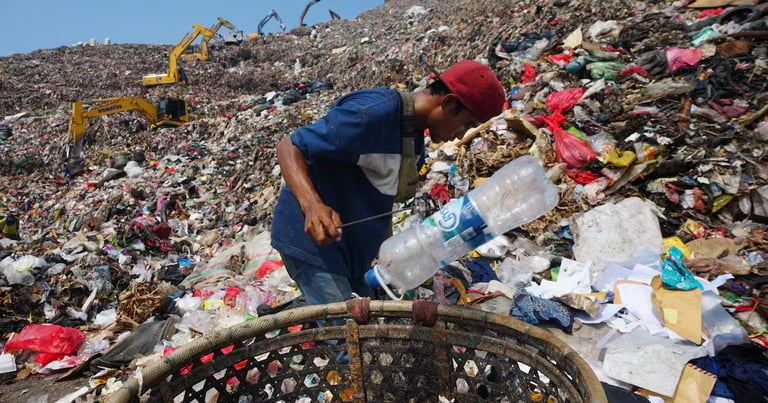


Indonesia’s Bantargebang landfill near Jakarta is shifting from open dumping to controlled, sanitary landfill systems as part of a national waste management reform that affects thousands of waste pickers who rely on scavenging for income.
The reform aims to reduce methane emissions from decomposing waste and improve environmental health, aligning with international climate efforts and recognizing Bantargebang’s history as a major methane emitter.
Bantargebang, a central but aging part of the reform, has only two of its original 12 methane-extraction wells remaining and faces substantial costs to address the remaining waste area.
Experts and advocates urge broader recycling and composting infrastructure and robust public education to ensure the transition lowers landfill volumes while preserving livelihoods.
Local communities describe a mix of pollution and health risks with economic benefits tied to the landfill, highlighting the complex trade-offs of the transition.
Residents vary in perspective: some note economic benefits from the landfill like housing and food stalls, while others report confusion and inconvenience with new waste sorting rules.
Community leaders frame the policy as both pollution and opportunity, citing existing livelihoods such as housing and food stalls for waste workers.
Public education and infrastructure are challenges as many residents are not used to separating waste; new rules require households to separate organics and recyclables and to support the development of refuse-derived fuel plants.
Indonesia currently manages only about a quarter of its daily waste through formal systems, with the rest dumped, burned, or unmanaged, underscoring the reform’s scale and urgency.
Jakarta plans to educate and involve residents in waste separation, but public understanding remains uneven and many are accustomed to disposing of all waste together.
For Nur Wencih, a 35-year-old widow, Bantargebang provides the main livelihood for her family, funding food and rent and enabling her daughters to live with relatives in a rural village.
Local initiatives, such as community waste banks, promote composting and urban farming, illustrating civil society efforts to adapt to the new waste regime.
Summary based on 13 sources
Get a daily email with more World News stories
Sources
AP News • Jul 27, 2026
Indonesia plan to cut landfill methane alters trash picker livelihoods | AP News
Yahoo News • Jul 27, 2026
As Indonesia cuts methane emissions, life atop a mountain of garbage begins to change
Yahoo News Canada • Jul 27, 2026
As Indonesia cuts methane emissions, life atop a mountain of garbage begins to change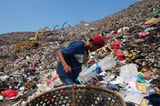
The Washington Post • Jul 27, 2026
As Indonesia cuts methane emissions, life atop a mountain of garbage begins to change