Caribbean Grapples with Intensifying Sargassum Blooms Threatening Tourism and Marine Life
July 31, 2026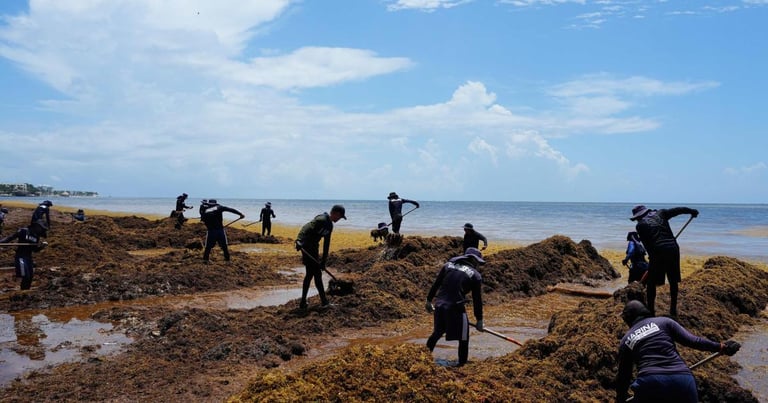


A wave of sargassum blooms is intensifying along Caribbean and Gulf coasts, smothering beaches, threatening tourism, and impacting marine life with record- or near-record levels in 2025 and 2026.
Mexico plans a $115 million push to curb the bloom and increase daily collection capacity beyond current bests, despite ongoing daily operational hurdles on peak days.
The overall narrative highlights a widening environmental and economic hazard with ongoing management challenges and diverse regional responses.
Coastlines and tourism infrastructure are struggling to adapt to the persistent bloom, underscoring that this is an expanding hazard, not a singular incident.
The tourism sector backs funding while pressing for longer-term environmental fixes and planning.
The issue intersects climate change, coastal management, energy, and biodiversity, marking a broad regional challenge across multiple jurisdictions.
Local responses, such as Martinique’s emergency sheltering and composting/bioenergy initiatives, illustrate how communities are adapting to the persistent problem.
Experts warn the bloom trend is non-episodic, rising in frequency and magnitude, and call for sustained monitoring and adaptive management to limit economic and ecological damage.
Researchers emphasize this is not a one-off event but a continuing environmental and economic challenge across the Caribbean and Gulf regions.
Junior scientist Brian Barnes describes the phenomenon as atypical and evolving, with each year bringing new patterns.
Notable voices include Barnes on abnormal conditions, local worker Alan Vázquez on tourism downturns, and Martinique’s rapid onshore processing efforts.
Increasing concern among scientists that the bloom is proliferating with significant ecological and economic consequences, including harmful gas emissions from decaying piles.
Summary based on 18 sources
Get a daily email with more World News stories
Sources
AP News • Jul 31, 2026
Seaweed smothers coastlines from the Caribbean to Mexico | AP News
Skift • Jul 31, 2026
Mexico Will Spend $115 Million Fighting Rotting Seaweed as Hotels Slash Rates
ABC News • Jul 31, 2026
Caribbean and Gulf of Mexico beaches swathed in record levels of seaweed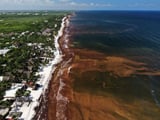
Spectrum News NY1 • Jul 31, 2026
Caribbean and Gulf of Mexico beaches swathed in record levels of seaweed