Urgent Call to Action: Global Coral Reefs Face Rapid Decline Amid Rising Ocean Temperatures
August 31, 2026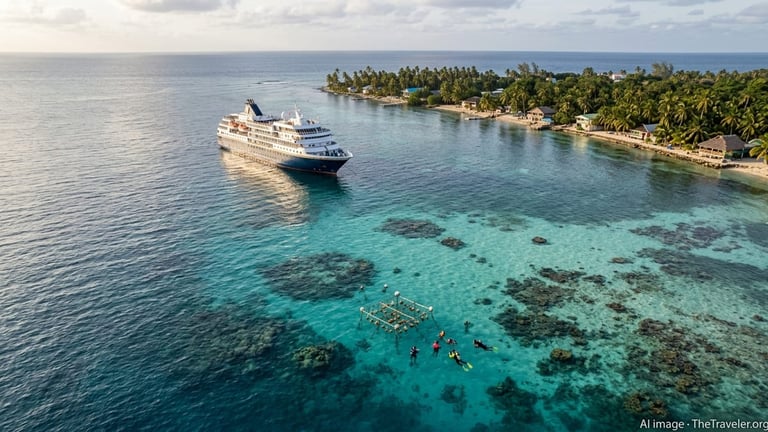

The Global Coral Reef Monitoring Network reports that reefs are experiencing shorter recovery times after bleaching, with hard coral cover down about 9.5% since the 1980–2009 average and recovery times shrinking from decades to roughly five to six years.
A warming trend driven by El Niño, and record ocean temperatures around 21.1°C in late August, raise the odds of another bleaching event this year.
Since 1998, mass bleaching events have occurred in 1998, 2010, 2016, and 2023, with 2023 being the most extensive, affecting about 77% of reef areas.
The cruise industry faces dual risks from reef decline: deteriorating natural attractions and heightened environmental scrutiny, prompting investments in reef restoration and cleaner operations while emissions and local impacts remain concerns.
To limit further losses, experts call for rapid emissions reductions and better local management, including tackling overfishing and coastal development alongside resilience-building measures.
Researchers are tracking “bright spots”—reef communities adapting better to heat stress—but it remains uncertain whether these adaptations will be widespread enough to preserve ecosystem functions.
Adaptation and restoration efforts are expanding, including breeding heat-tolerant corals, reef outplanting, protected areas, stricter visit limits, and shifting tourism toward non-reef experiences.
The article emphasizes urgency and uncertainty: resilience is possible but the pace of warming and bleaching risks ongoing declines without substantial action.
Local stressors such as episodic floods, cyclones, and dredging have also affected WA reefs, compounding climate impacts.
For reefs to persist, a combination of reduced greenhouse gas emissions and stronger local protections—fighting overfishing, improving water quality, and limiting coastal development—is needed to boost regeneration chances.
Solutions stress cutting greenhouse gas emissions and addressing local stressors to help reefs restructure and recover under a hotter, more disturbed climate.
Without strong emissions cuts and better local management, reef decline is likely to continue at current bleaching frequencies of roughly every five to six years.
Summary based on 12 sources
Get a daily email with more Science stories
Sources

Yahoo News • Aug 31, 2026
Coral bleaching occurring too frequently for reefs to recover, scientists say
Yahoo News Canada • Aug 31, 2026
Corals in decline globally, nearly half a century of data shows
CBC • Aug 31, 2026
Corals in decline globally, nearly half a century of data shows
Scripps News • Aug 31, 2026
New report shows the world's coral reefs are declining rapidly