WMO Warns: Wildfires, Heatwaves Escalate Global Air Pollution and Health Risks
September 7, 2026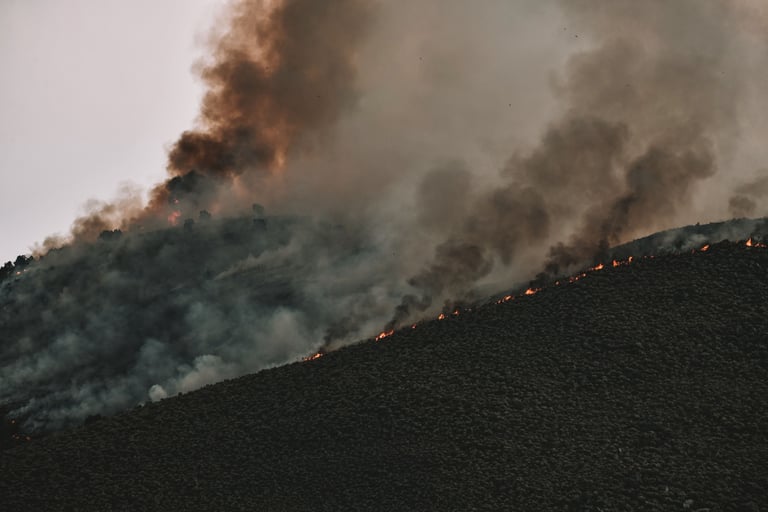


The World Meteorological Organization warns that wildfires and heatwaves are driving higher levels of fine particulate pollution (PM2.5) and tropospheric ozone, posing growing health risks and declining air quality globally.
Extreme fire-smoke events have reportedly tripled since the 1990s, contributing to about 100,000 additional deaths per year between 2010 and 2018, with the potential for undercounting.
The report urges complementary and coordinated policies on air quality and climate, stressing that pollution and climate change are interconnected and cannot be tackled in isolation.
Observations span Europe, North America, China, and the southeastern United States, illustrating the issue’s global reach.
Readers should note the article is partially behind a paywall; some continuation and details are reserved for subscribers.
Released on the International Day of Clean Air for blue skies, the report draws on data from CAMS, NASA GEOS-IT, SILAM, and NAAPS, showing broad model consensus on increasingly complex atmospheric processes.
The coverage is based on the WMO report and is continuously updated.
Microplastics and black carbon are highlighted as additional concerns, with black carbon reducing snow and ice albedo and contributing to warming.
The 2026 Air Quality and Climate Bulletin cites experts Johann Georg Goldammer and Patricia Krecl, emphasizing the health consequences of extreme wildfires across regions.
In 2025, PM2.5 levels exceeded long-term averages in northern Canada, parts of Russia, western-central Africa, and northwestern Spain due to fires; China was below average, while India remained above average due to biomass burning and other sources.
PM2.5 remains a major health hazard from various sources, with 2025 concentrations marking notable fire-driven hotspots and regional disparities.
In 2025, PM2.5 exceeded long-term averages in multiple regions due to heightened fire activity, including a late-summer hotspot in north-western Spain.
Summary based on 14 sources
Get a daily email with more World News stories
Sources
World Meteorological Organization • Sep 7, 2026
WMO bulletin shows air quality and climate interlinkages
Health Policy Watch • Sep 7, 2026
As Fires Increase, It Will Be Harder To Meet WHO Clean Air Standards - Health Policy Watch
FRANCE 24 • Sep 7, 2026
Wildfires, heatwaves threaten global air quality and health, UN warns
Tech Times • Sep 7, 2026
Your Wildfire AQI Reading May Miss 93% of Risk: WMO Documents Toxicity Gap