Salk Institute's Soybean Study Targets Drought Resilience and Carbon Storage to Combat Climate Change
September 18, 2026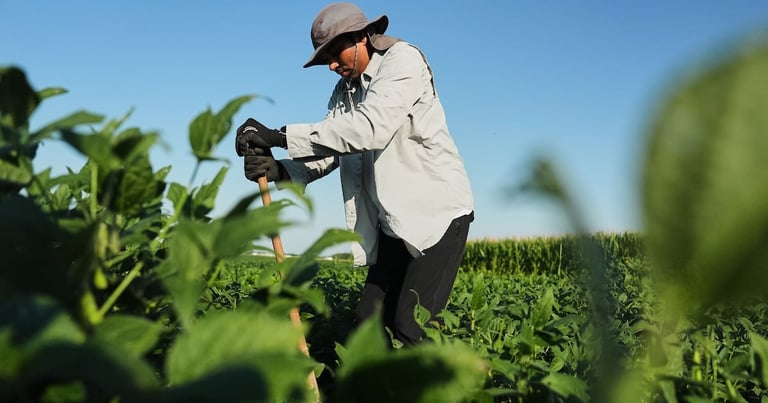

Researchers at the Salk Institute are studying deeper soybean roots to boost drought resilience, increase soil carbon storage, and potentially raise crop yield per unit area.
Field results are expected this fall from trials in Illinois, Missouri, Kansas, and Iowa to test carbon storage and yield outside lab conditions.
Projections suggest deeper-rooted crops could store roughly one extra metric ton of CO2 per hectare annually, though storage duration depends on soil depth and conditions.
A central challenge is translating lab findings to real-world farming, including potential trade-offs with yield and the need for close collaboration with farmers and seed companies for rapid adoption.
The initiative presents a race against climate change, underscoring the urgency for rapid funding and collaboration to scale solutions before tipping points are reached.
Overall, the effort could become a tool for climate-mitigating agriculture by pairing higher productivity with enhanced carbon sequestration, contingent on scalable adoption and proven field benefits.
Adoption hinges on farmer and industry buy-in, with faster uptake if major seed companies recognize clear benefits and existing infrastructure supports deployment.
Incentives, seed company involvement, and policy/subsidy structures will shape adoption, with past rapid uptake of herbicide-resistant crops serving as a potential benchmark.
Initial field results are due this fall, and large-scale adoption by farmers and seed companies is seen as essential to achieve meaningful CO2 removal, aided by existing agricultural infrastructure.
Experts warn that real-world adoption may take longer due to subsidies, trade rules, financing, and farmer risk considerations.
Researchers emphasize the urgency of rapid funding to address climate change amid uncertainty about field performance and trade-offs, as development timelines accelerate.
Demonstrated farmer benefits, integration with current agricultural infrastructure, and accelerated funding are crucial to shorten development timelines.
Summary based on 6 sources
Get a daily email with more Science stories
Sources
AP News • Sep 18, 2026
Scientists developing new soybean to store carbon, withstand drought | AP News
Boston Herald • Sep 18, 2026
Scientists hope deeper-rooted soybeans can withstand climate extremes and store more carbon
WKMG News 6 & ClickOrlando • Sep 18, 2026
Scientists hope deeper-rooted soybeans can withstand climate extremes and store more carbon