CJI Advocates Eco-centric Proportionality at NGT Conference, PM Launches Environmental Initiatives
September 19, 2026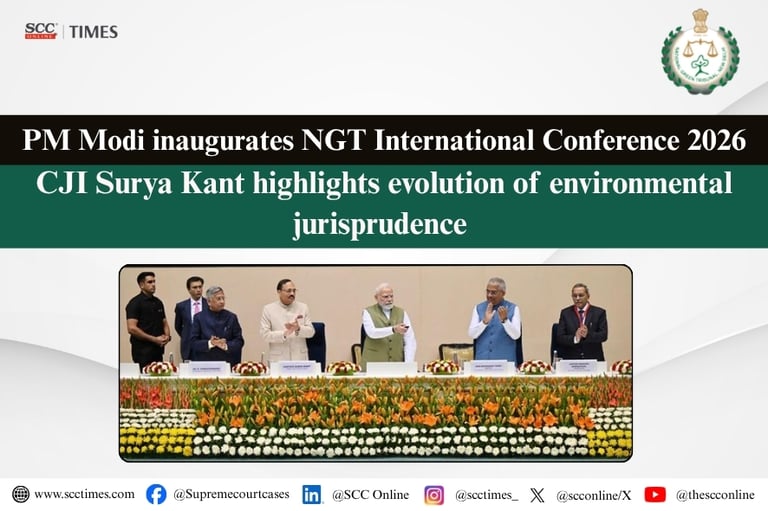


The Chief Justice of India outlined the evolution of Indian environmental jurisprudence from constitutional provisions to climate rights, stressing eco-centric proportionality that harmonizes development with conservation.
He emphasized that environmental protection should enable sustainable development and be accountable to both people and the environment, using ecocentric proportionality to balance protection with practical needs.
Justice Surya Kant noted environmental protection is rooted in India's civilisational ethos and constitutional framework, citing Articles 48A and 51A(g).
The Prime Minister launched an NGT Mobile Application during the inaugural session to support conference activities and provide information access.
He suggested international conference discussions could broaden understanding of emerging environmental challenges and facilitate cross-jurisdictional sharing.
Discussions covered water conservation and climate-resilient agriculture, including the construction of Amrit Sarovars, vast rainwater harvesting networks, PMKSY irrigation schemes and Per Drop More Crop, plus promotion of millets aligned with the UN’s Millet Year 2023.
The conference, organized by the National Green Tribunal, gathered jurists, scientists, policymakers and environmental experts from 17 countries and major international bodies such as UNEP and the ADB.
Participants from multiple nations discussed climate change, environmental law, governance and environmental justice, with a focus on cross-border collaboration.
Energy and mobility advances highlighted included a hydrogen train, a dramatic rise in electric vehicle sales, expansion of urban public transport, near-complete railway electrification and Inland Waterways to cut road freight.
Prime Minister Modi underscored India’s climate and environmental initiatives, noting equity in global action and India's relatively low per-capita emissions, while citing programs like One Sun, One World, One Grid, ISA, CDRI, Global Biofuel Alliance and the International Big Cat Alliance.
Forestry, waste management and the circular economy were highlighted, including more forest cover, campaigns like Ek Ped Maa Ke Naam, restrictions on single-use plastics, GOBARdhan for rural organic waste, and broader waste-to-resource strategies.
The NGT International Conference 2026 opened in New Delhi with a two-day program focused on the future of environment and climate dynamics.
Summary based on 2 sources