Severe Drought Could Put More Than 80% of Cactus Species at Risk by Century’s End
November 11, 2026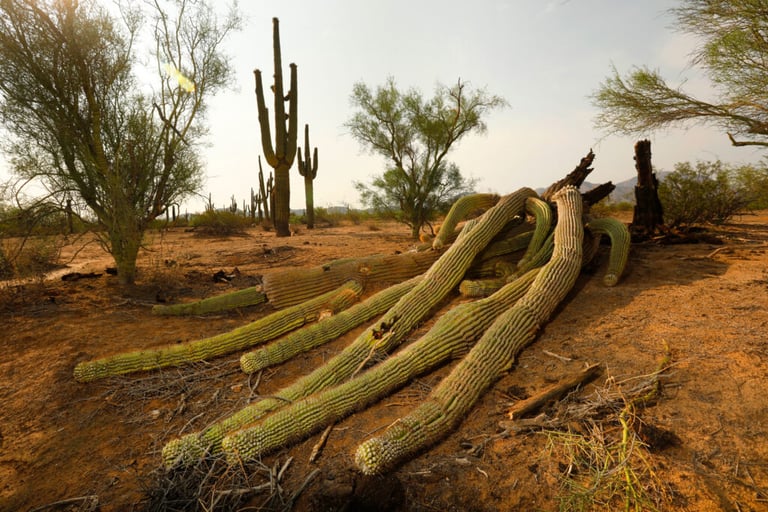

A Nature study of nearly 1,000 cactus species finds that climate risks look far worse when severe drought is considered alongside rising temperatures: by century’s end, more than 80% could lose most of their suitable habitat.
To sharpen the forecasts, researchers combined biodiversity records, field observations and nearly 650,000 iNaturalist observations with projections of severe drought and warming, addressing a gap in models that often focus on average temperature and rainfall.
With severe drought included, 66% of modeled species were projected to lose suitable habitat, compared with 55% in conventional models; when species could not disperse, the share rose to 84–85%, versus 69–72%.
The projected losses are especially pronounced in cactus-rich regions: species richness could decline by 29% in Chile and the border area with Argentina, 32% in Central America, and 34% across Peru, Ecuador and part of central Colombia, with some areas facing drops above 50%.
The findings challenge the assumption that cacti’s adaptations to arid environments will protect them from climate change, since longer dry spells and rising temperatures may exceed what many species can tolerate.
Drought can weaken cacti without killing them immediately, slowing growth, increasing mortality or disrupting flowering and reproduction; prolonged drought has already been linked to less frequent reproduction among saguaros in the Sonoran Desert.
Impacts are already visible in parts of the American Southwest, where chollas, prickly pears and saguaros have experienced mortality, stunted growth and reduced reproduction, affecting animals that depend on them for food and habitat.
Pablo Guerrero also pointed to drought-affected Copiapoa solaris in Antofagasta, Chile, and called for stronger protection and monitoring of cactus populations’ survival and regeneration.
Cacti help sustain desert ecosystems by providing food, pollen and shelter, while their remains add nutrients to soil; Indigenous groups in Mexico’s Sonoran Desert also harvest saguaro fruit.
The authors say the modeling could help target limited conservation resources, including through protecting threatened lands, preserving plants in botanical gardens, and dispersing seeds into suitable new environments.
The findings are expected to inform updated IUCN Red List assessments; the last Global Cactus Assessment was conducted in 2015, and the authors warn that climate stress will compound habitat destruction and illegal collection.
Researchers and an outside botanist say the approach could be applied to other plants, with public interest and citizen-science observations offering opportunities to strengthen data and conservation.
Summary based on 5 sources
Get a daily email with more Science stories
Sources

Phys.org • Nov 11, 2026
Even cacti are severely threatened in a warmer, drier world
EurekAlert! • Nov 11, 2026
Study in Nature warns of a decline of up to 30% in cactus species richness due to severe droughts
theprint • Nov 13, 2026
Too hot for a cactus? Global warming puts a quarter of the species at risk
Grist • Nov 12, 2026
Climate change is coming for the cactus. Yes, the cactus.